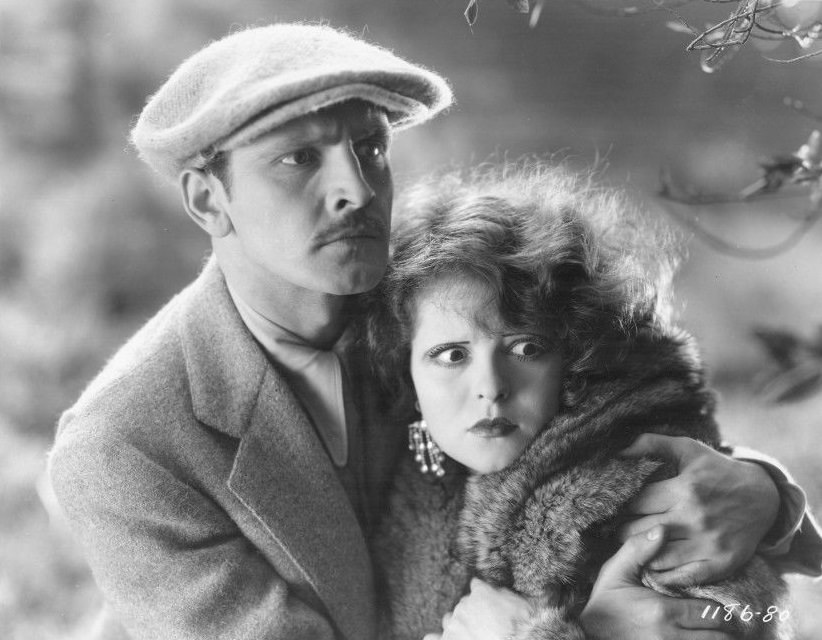
A tense embrace fills the frame as Clara Bow and Fredric March hold close, their faces turned toward something unseen beyond the camera. March’s protective stance, flat cap, and tailored overcoat give him a grounded, masculine silhouette, while Bow’s wide-eyed unease and glamorous styling—fur collar, defined lipstick, and statement earrings—telegraph the high-stakes emotion early Hollywood loved to amplify. The soft focus background keeps attention locked on their expressions, letting worry and resolve do the talking.
Released in 1929, *The Wild Party* sits at a turning point in film history, when silent-era acting traditions met the new demands of sound. Bow, long celebrated for her magnetic screen presence, is photographed here with a vulnerability that feels both intimate and theatrical, while March’s steady intensity hints at a different kind of leading man emerging in the late 1920s. The result is a classic studio portrait style that sells drama in a single glance—romance edged with danger, comfort shadowed by fear.
For collectors and classic movie fans, this still offers more than star power; it’s a glimpse into the visual language of pre-Code Hollywood and the way studios marketed mood, chemistry, and conflict. Details like the heavy outerwear and fur wrap suggest a carefully constructed world of luxury and uncertainty, designed to read instantly in newspapers, lobby cards, and promotional materials. As a piece of film history, it’s a striking reminder of how Clara Bow and Fredric March helped shape the era’s screen romance and suspense.