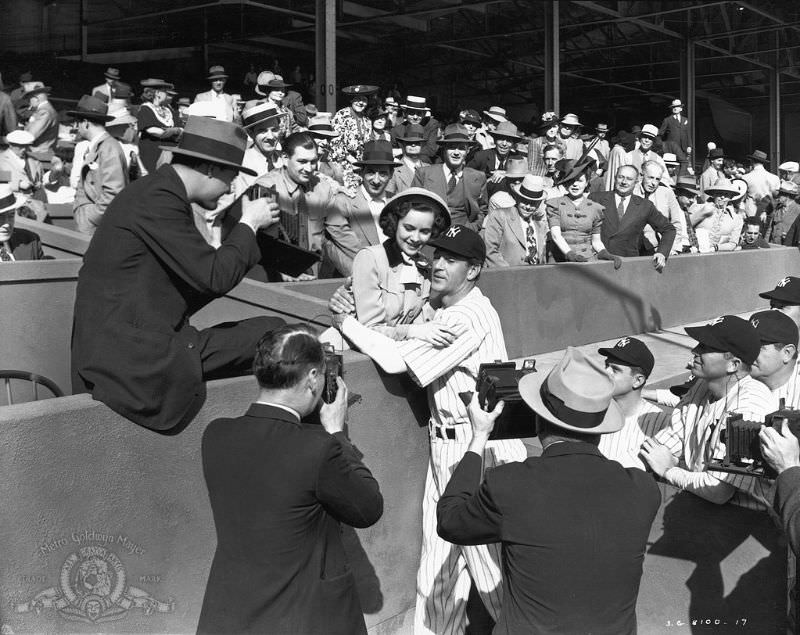
Crowds lean over the ballpark railing as cameras click, turning a moment of sport into a moment of cinema. In the foreground, a uniformed player in classic pinstripes and a Yankees cap lifts a smiling woman for the photographers, while spectators in suits and brimmed hats pack the stands behind them. The scene feels half candid, half carefully staged—exactly the kind of behind-the-scenes energy that helped make Hollywood’s baseball stories feel real.
Gary Cooper’s portrayal in *The Pride of the Yankees* brought Lou Gehrig’s legend to audiences who may never have seen him play, translating a sports hero into a screen icon. Photos like this underline how closely the production leaned into authentic baseball atmosphere: the dugout wall, the press of reporters, the star treatment, and the public gaze that followed athletes and actors alike. Even without a captioned date or venue, the visual language points straight to America’s golden-age mix of major-league spectacle and studio publicity.
For collectors and fans of classic Movies & TV history, this image offers more than nostalgia—it’s a window into how a biographical sports film was marketed and mythologized. The tight ring of photographers suggests a promotional shoot, while the packed grandstand hints at how eagerly the public consumed both baseball and the movies. Paired with the post’s title, it invites readers to revisit Lou Gehrig’s story as filtered through Gary Cooper’s performance, and to see how *The Pride of the Yankees* helped shape the enduring memory of a Yankee legend.