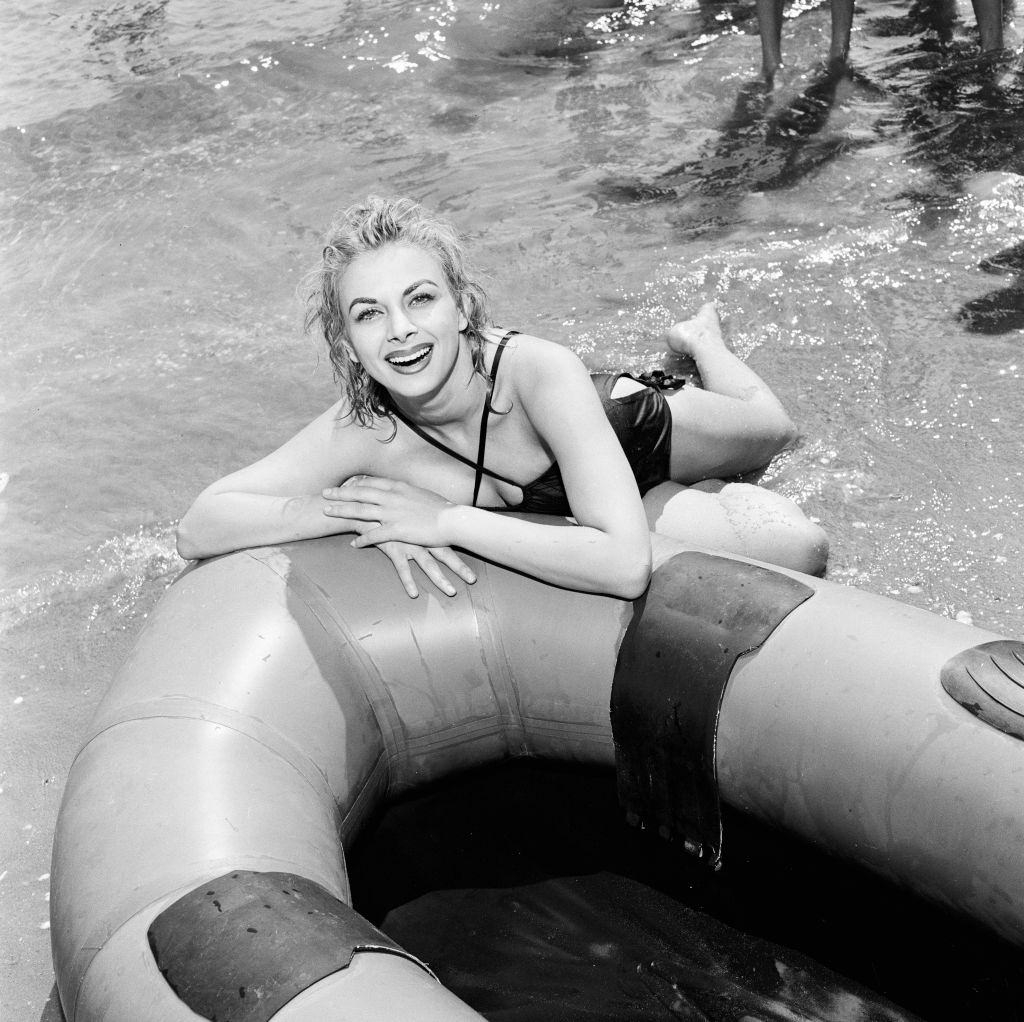
Laughing in the shallows, Italian actress Sandra Milo clings to an inflatable raft as seawater sparkles around her, hair wet and cheeks lifted in an unguarded grin. The candid pose—half draped across the rubber tube, half afloat—turns a beachside moment into pure movie-star charm, with the Adriatic surf doing the work of a spotlight. Bare legs and distant swimmers frame the scene, hinting at the crowd and commotion just outside the lens.
Festival glamour often gets remembered for gowns and premieres, yet the 1956 Venice Film Festival also unfolded under open skies, where celebrities mixed with sun, sand, and curious onlookers. Milo’s playful “dunking” reads like a publicity lark, the kind of spontaneous spectacle photographers loved: informal, flirtatious, and instantly shareable in magazines of the era. In a single snapshot, cinema’s carefully staged world collides with the refreshing unpredictability of the sea.
For readers interested in classic Italian cinema and Venice Film Festival history, this image offers a textured glimpse of mid-century star culture beyond the red carpet. The crisp black-and-white tones emphasize water ripples, sunlit highlights, and the tactile shine of the raft, grounding the moment in summer realism. It’s a reminder that film festivals are not only about awards and screenings, but also about the lively, human interludes that shape how an era is remembered.