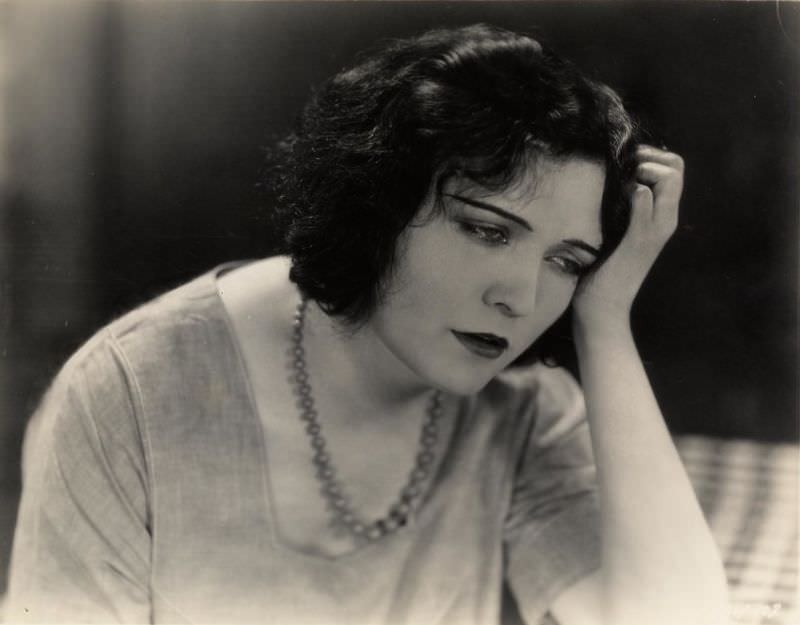
A hush seems to hang over the frame: a woman with softly waved hair leans into her hand, eyes turned away as if listening for footsteps just beyond the set. The gentle studio lighting and close-up composition draw attention to mood rather than spectacle, letting a single expression suggest longing, fatigue, or a secret held too tightly. Paired with the title “The Secret Hour (1928),” the portrait reads like an invitation into the intimate, shadowed corners of late silent-era storytelling.
In the world of 1920s cinema, faces did the heavy lifting, and this kind of publicity still reminds us how film emotion was marketed—through gaze, posture, and carefully arranged glamour. The simple dress and understated necklace keep the focus on the actor’s interior life, while the soft background blur evokes a private moment caught between scenes. For fans of classic Movies & TV history, it’s a striking example of how studios crafted iconic images that could sell a drama before a single intertitle appeared.
What makes “The Secret Hour” feel timeless is the way the photograph suggests narrative without spelling it out—an unspoken message, a troubling decision, a quiet reckoning. Even without names or plot details visible here, the image captures the era’s visual language: romantic melancholy, theatrical poise, and the promise of a story unfolding in whispers. As a piece of vintage film memorabilia, it’s ideal for anyone exploring 1928 movies, silent film aesthetics, and the enduring artistry of early Hollywood portrait photography.