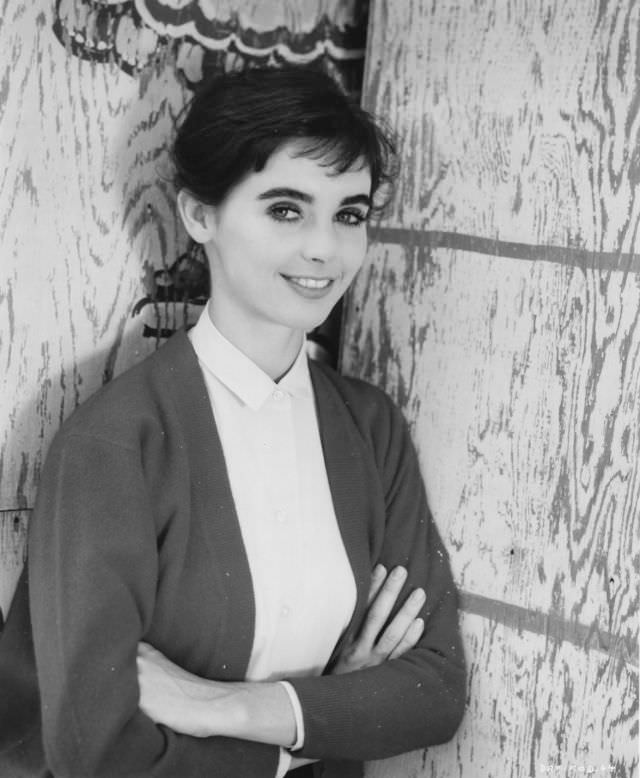
A quiet, poised portrait of Millie Perkins during the filming of *The Diary of Anne Frank* (1959) hints at the delicate balance the production had to strike: honoring a real young girl’s words while shaping them for the screen. With her arms folded and a soft, composed expression, Perkins looks both youthful and self-possessed—an on-set moment that feels suspended between performance and reflection.
Behind her, the rough, patterned wall evokes a constructed interior, a reminder that much of what audiences remember as history in classic cinema was painstakingly built in studios and soundstages. The simple blouse and cardigan read as deliberately modest costuming, steering attention to the face and the emotions it must carry. Even without action or dialogue, the photograph suggests the film’s focus on ordinary details made extraordinary by circumstance.
For fans of classic Movies & TV, this behind-the-scenes image offers a tactile connection to a landmark adaptation and the era of 1950s filmmaking. It’s a compelling addition to any archive of Hollywood history, Anne Frank film memorabilia, or portraits of actors in transformative roles. The stillness here underscores why the 1959 production remains a touchstone: not for spectacle, but for the human scale of its storytelling.