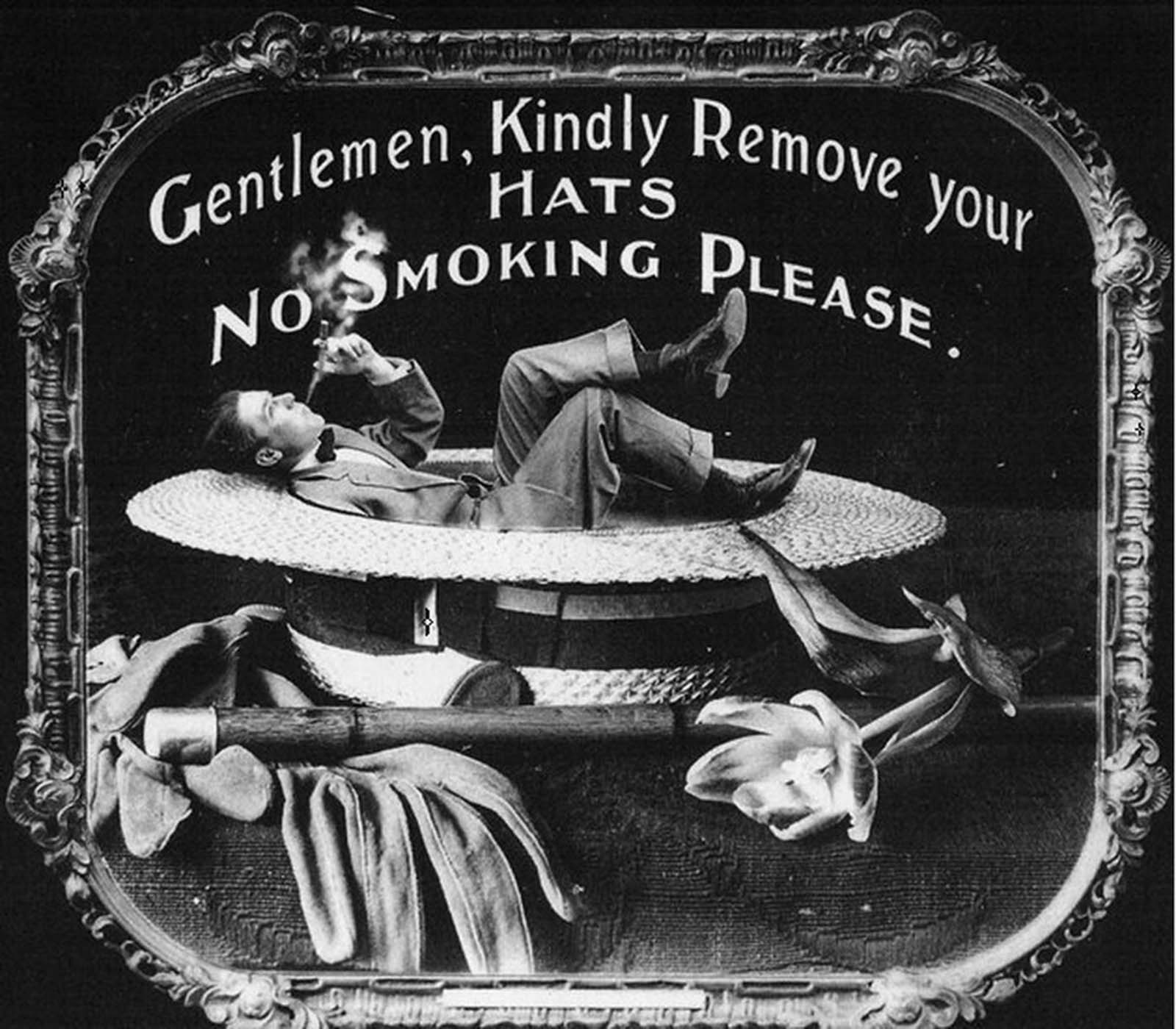
Bold lettering arcs across the frame with a gentle command—“Gentlemen, Kindly Remove your HATS”—followed by the firmer reminder, “NO SMOKING PLEASE.” Beneath the message, a well-dressed man lounges with theatrical ease, cigarette raised, turning the warning itself into a visual joke. The ornate border and high-contrast design feel like an early cinema slide or lobby card, meant to be read quickly before the main attraction began.
Early movie theaters were crowded, dim, and full of potential hazards, so etiquette and safety often arrived as entertainment. Hats blocked sightlines for anyone seated behind, and smoke could irritate audiences while adding to the ever-present fire risk of a room filled with fabrics and early projection equipment. In 1912, telling patrons to keep their cigarettes in their pockets wasn’t only about manners—it was about managing a new kind of public space where strangers gathered for the marvel of moving pictures.
There’s also a sly snapshot here of shifting social norms: the audience is being trained, politely but insistently, into modern cinema behavior. The humor of a man ignoring the rule while the rule looms overhead suggests theaters understood that compliance came easier when delivered with wit. For readers interested in silent era moviegoing, film history ephemera, and the everyday culture surrounding early screenings, this image offers a vivid reminder that the show began before the projector ever rolled.