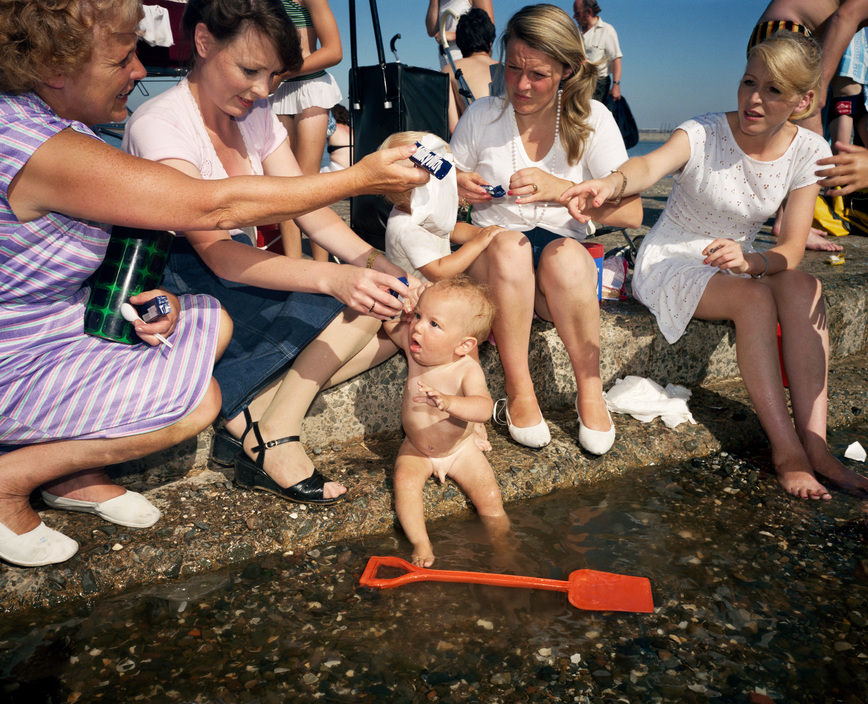
Sunlight glints off wet stones at the water’s edge while a baby stands ankle-deep in the shallows, framed by adults perched on rough steps with their shoes kicked off. Hands reach in with a towel and small items, the kind of improvised seaside care that feels instantly familiar to anyone who’s done a day trip with kids. A bright plastic spade lies abandoned in the foreground, a small splash of colour against the gritty texture of the shore.
New Brighton in the 1980s wasn’t about polished brochures so much as making the most of what the resort offered: sea air, a bit of paddling, and a place to sit close together when the tide rolled in. The casual dresses, practical sandals, and no-nonsense posture of the group suggest a working-class holiday rhythm—quick comforts, shared attention, and the unspoken teamwork of keeping everyone fed, dry, and happy. Even with crowds behind them, the moment feels intimate, like a snapshot of family and friends claiming their patch of coast.
Gritty photos like this are valuable precisely because they don’t romanticise the seaside; they record its real surfaces and routines—pebbles underfoot, damp hems, and the constant negotiation between sun and water. For readers searching for New Brighton history, 1980s beach life, or working-class holidays at British seaside resorts, the scene offers a candid window into how leisure was lived rather than advertised. It’s ordinary, unguarded, and that’s what makes it enduring.