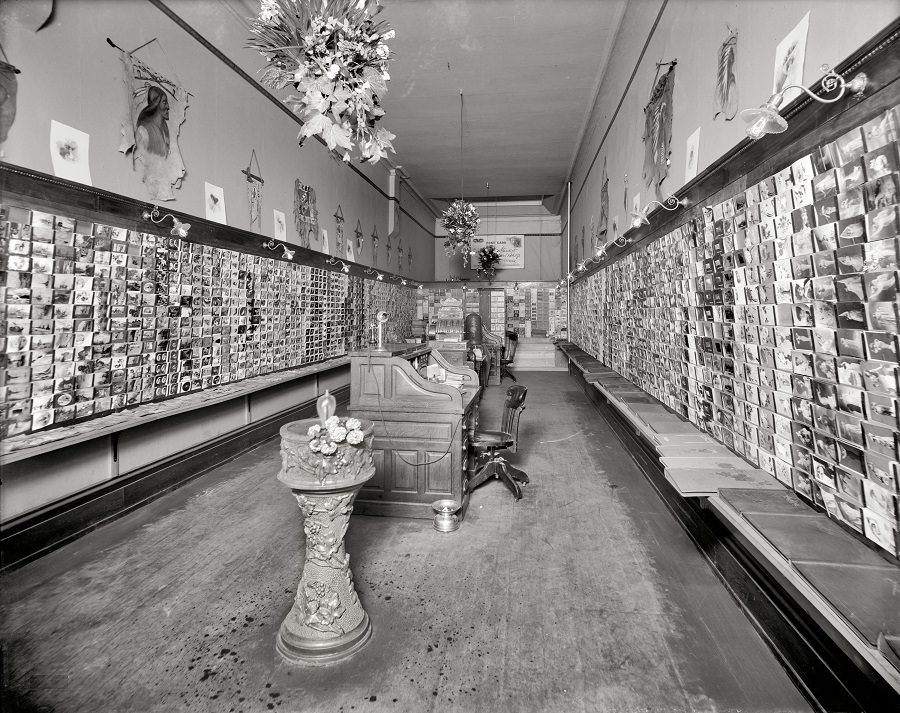
Long, narrow, and unexpectedly theatrical, the Cincinnati Arcade in 1910 opens onto a corridor-like shop space where both walls are packed with neatly arranged cards or small prints. Rows upon rows create a mosaic effect, turning merchandise into décor, while glass shades and simple fixtures run the length of the room to keep every display visible. A floral pedestal and hanging greenery add a touch of elegance to what is, at heart, a busy retail interior designed to entice passersby.
Along the center aisle, a wooden counter and a couple of chairs suggest the rhythm of customer service—browsing, requesting, selecting, and paying—played out in close quarters. Benches line the walls, inviting visitors to linger and compare choices, and the perspective draws the eye toward the back where storage and additional shelving hint at the stockroom beyond. The overall impression is of an early twentieth-century shopping arcade at work: orderly, curated, and built around the simple pleasure of choice.
Details like the dense displays, tidy floor, and decorative touches help anchor the scene in the everyday commercial life of Cincinnati’s downtown era. For anyone searching Cincinnati Arcade history, early retail interiors, or 1910s storefront photography, this image offers a richly textured glimpse into how urban shopping spaces were arranged before modern department-store layouts took over. It’s a quiet reminder that “places and people” can be read in the objects they handled, the aisles they walked, and the carefully staged rooms that sold them something to take home.