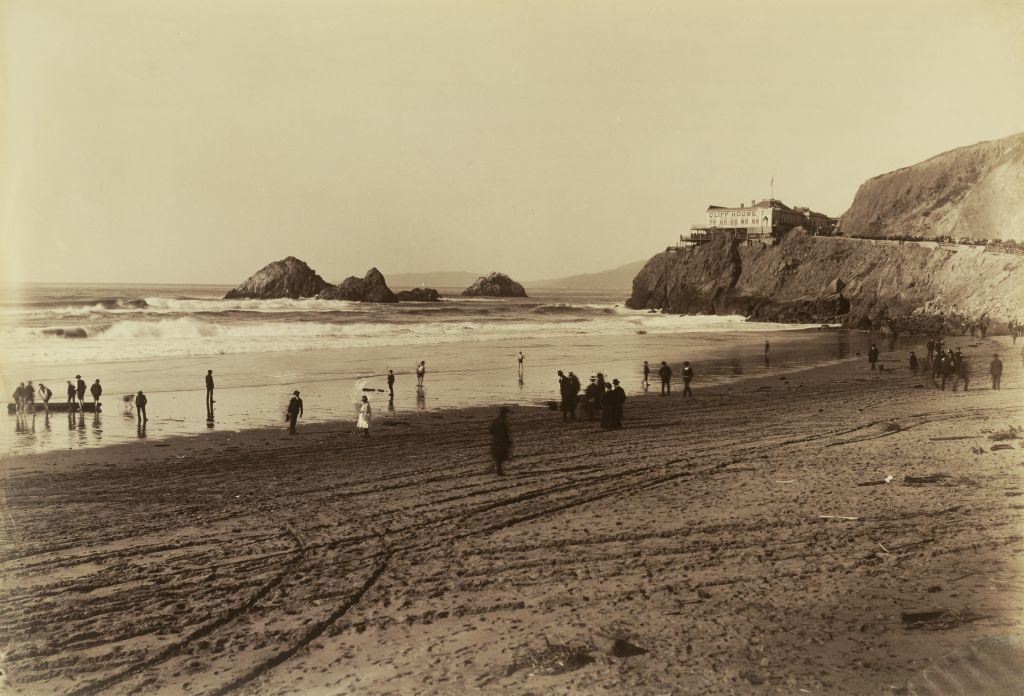
Wind and surf dominate the scene at Ocean Beach, where small figures scatter along the wet sand beneath a pale sky. People linger at the shoreline and cluster in little groups, their dark coats and long skirts turned toward the Pacific as waves roll in and recede. Offshore, rugged rocks rise from the water, anchoring the view in the familiar drama of San Francisco’s western edge.
Perched on the headland to the right, the Cliff House stands as a bold lookout over the breakers, its sign visible against the bluff. A road clings to the hillside behind it, hinting at the steady stream of visitors drawn to this spot for sea air, spectacle, and the thrill of standing above the crash of the ocean. The composition makes the building feel both remote and central—an outpost of leisure at the boundary between city life and open water.
Taken in 1902, the photograph offers a calm, lived-in glimpse of a famous San Francisco landmark before later upheavals reshaped the city’s story. The beach bears tracks in the sand, and the long exposure softens some moving figures, lending the outing an almost dreamlike motion. For anyone searching the Cliff House, Ocean Beach, or early twentieth-century San Francisco history, this image preserves the everyday ritual of visiting the coast when the edge of town felt wide and untamed.