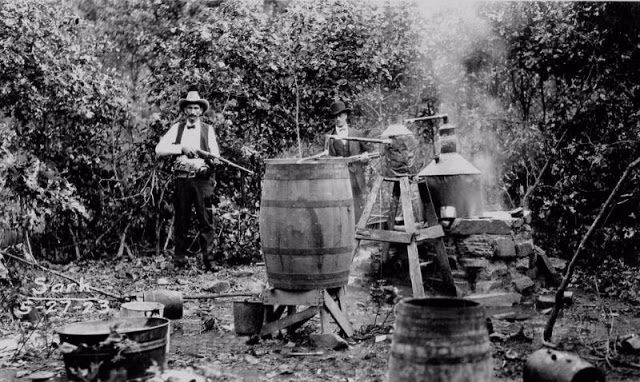
Tucked into a wooded clearing, two lawmen pose with a long gun beside the rough apparatus of an illicit still—barrels, buckets, and a metal cooker set over a makeshift fire. Smoke and steam drift upward through the brush, turning the scene into a stark snapshot of Prohibition-era enforcement where the evidence sits plainly in the open. The composition is cluttered in a telling way, with containers scattered at their feet and the distilling gear occupying the center like the true subject of the raid.
Osage County in 1923 carried tensions that went far beyond a single seizure, and the title’s reference to “the time of the murders” places this moment within a broader atmosphere of fear and scrutiny. Illegal liquor could mean quick cash, leverage, or a reason to threaten—especially in communities already rattled by violence and suspicion. In that context, a raid like this reads not only as a routine crack-down on moonshine, but as part of the wider contest over law, money, and control.
For readers searching the history of Osage County, Prohibition, and moonshine raids, the photo offers concrete details that documents often flatten: the improvised construction, the close quarters, and the guarded posture of the officers. It also hints at how rural landscapes could conceal—and occasionally reveal—hidden operations in plain sight. Use this image as a visual doorway into 1923, when headlines about crime and investigations overlapped with the everyday policing of illegal alcohol.