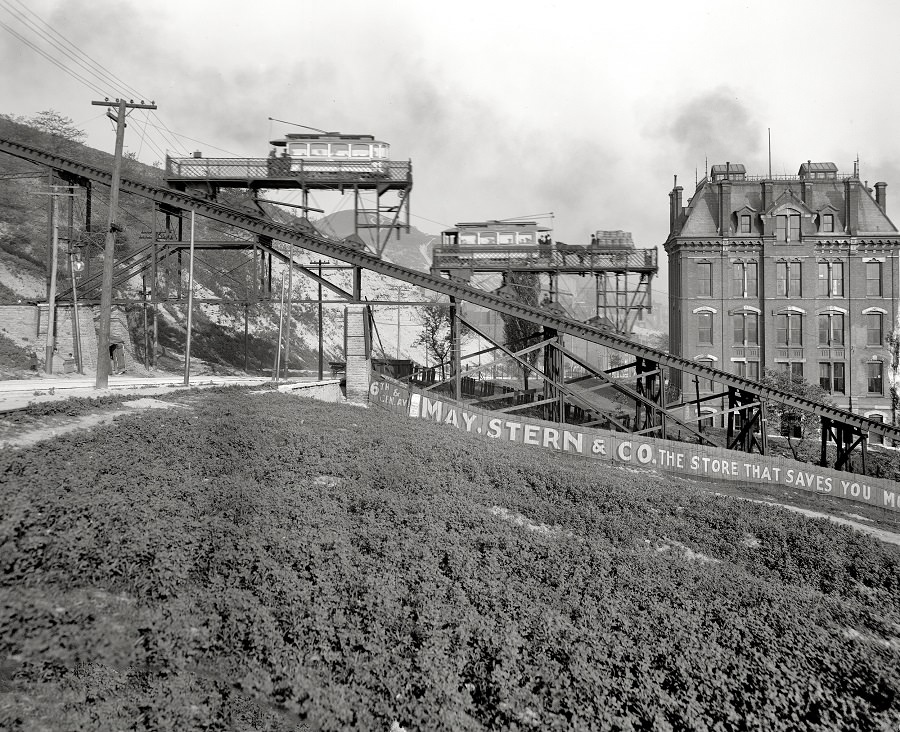
Climbing Cincinnati’s steep hillside, an inclined trolley line dominates the scene, its trestles and rails cutting diagonally across the frame while open cars perch on high platforms above. Power poles and a web of wires hint at the electrified city in motion, and the graded path below suggests constant maintenance on a route built to conquer the terrain. In the distance, smoky haze softens the skyline, adding a working-city atmosphere to this circa 1909 view.
Along the slope, a bold painted advertisement for “MAY, STERN & CO.” stretches across a retaining wall, a reminder that early 20th-century transit and retail promotion often traveled together. The commercial message sits beside the raw geometry of steel supports and wooden framing, turning a utilitarian piece of infrastructure into a corridor of urban spectacle. For anyone searching Cincinnati history, this single detail grounds the photograph in everyday life—shopping, commuting, and the city’s visual culture.
At right, a substantial multi-story building with ornate rooflines stands close to the tracks, underscoring how tightly industry, housing, and transportation could be packed into the hill neighborhoods. The contrast between the orderly façade and the rugged incline reveals the practical challenge Cincinnati faced: stitching together lowlands and heights with mechanical ingenuity. As an historic Cincinnati trolley photo, it offers a vivid look at how residents once went “up the hill” before automobiles and highways reshaped the climb.