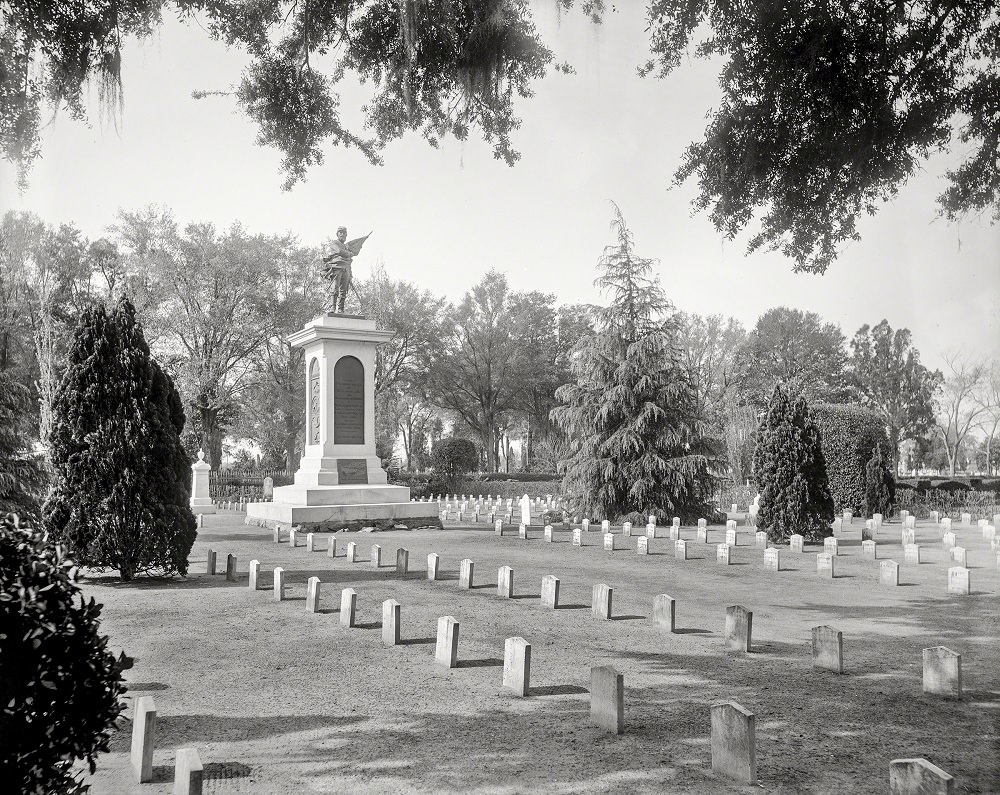
Beneath a canopy of live oak limbs and trailing Spanish moss, the Confederate Monument at Magnolia Cemetery rises above a carefully ordered field of small grave markers. The tall pedestal and soldier figure create a strong vertical presence against the low, quiet geometry of the grounds, drawing the eye from the sunlit lawn up to the statue’s silhouette. Even at a distance, the monument reads as a focal point in a landscape designed for remembrance.
The surrounding cemetery scene is as telling as the memorial itself: trimmed shrubs, broad open paths, and the repeating rhythm of headstones stretching in neat rows. In this 1900 view of Magnolia Cemetery in Charleston, the balance between cultivated garden space and burial ground reflects the era’s preference for picturesque, park-like memorial settings. Trees and evergreens soften the lines of stone, suggesting a place meant for visiting as much as for mourning.
As a historical photograph, it offers more than a record of a single structure—it hints at how public memory was shaped and displayed in the early twentieth-century South. Confederate monument imagery, cemetery design, and the everyday maintenance of these grounds all intersect here, making the scene valuable for researchers, genealogists, and Charleston history readers alike. The result is a calm, expansive look at Magnolia Cemetery that invites closer attention to the symbols, spaces, and choices embedded in the landscape.