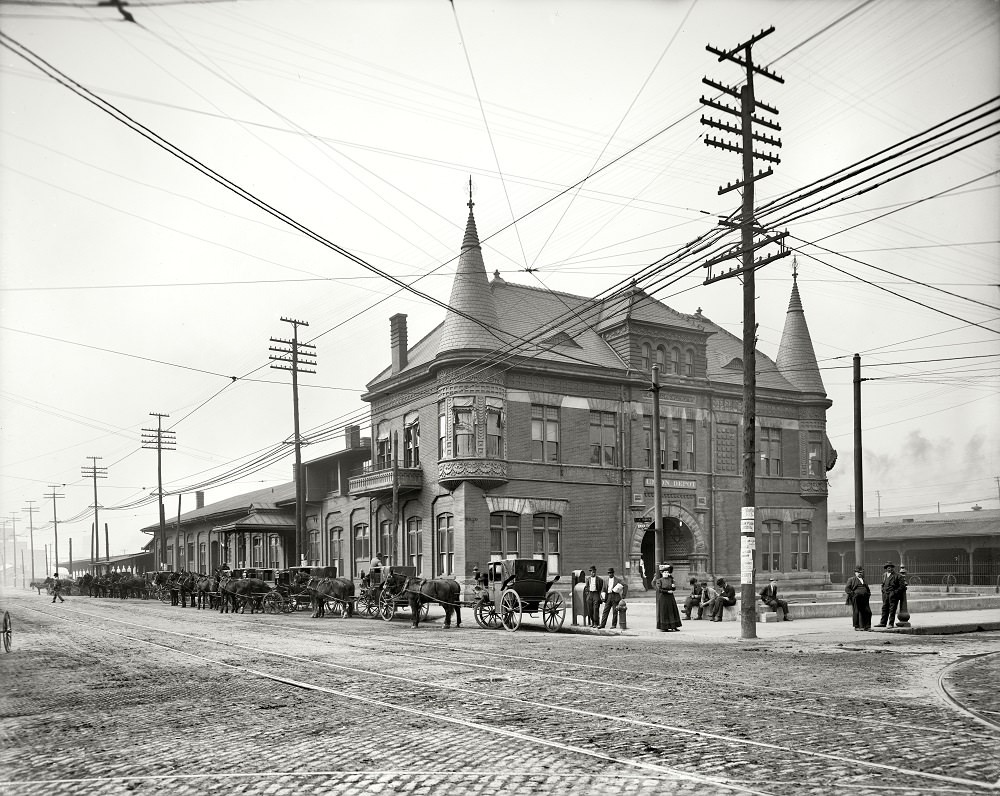
Rising above Calhoun Street, the Union Depot in Memphis stands like a civic landmark in 1907, its turreted roofline and arched entryway signaling the importance of rail travel to the city’s daily life. The brick façade, decorative stonework, and clustered windows suggest a station built not just for utility, but to impress arriving passengers and advertise Memphis as a modern Southern hub.
Along the curb, a long line of horse-drawn carriages waits in orderly formation, ready to ferry travelers and baggage between the depot and nearby streets. Men gather in small knots on the sidewalk and steps, some lingering, some poised to move on, while the cobblestone roadway and embedded streetcar tracks hint at the mix of transportation that shaped downtown at the turn of the century.
Overhead, a web of utility and trolley wires stretches between tall poles, visually tying the depot to the broader infrastructure that kept early twentieth-century Memphis humming. The scene offers rich detail for anyone interested in Memphis history, railroad architecture, and the everyday rhythm of an American city before automobiles fully took over the streetscape.