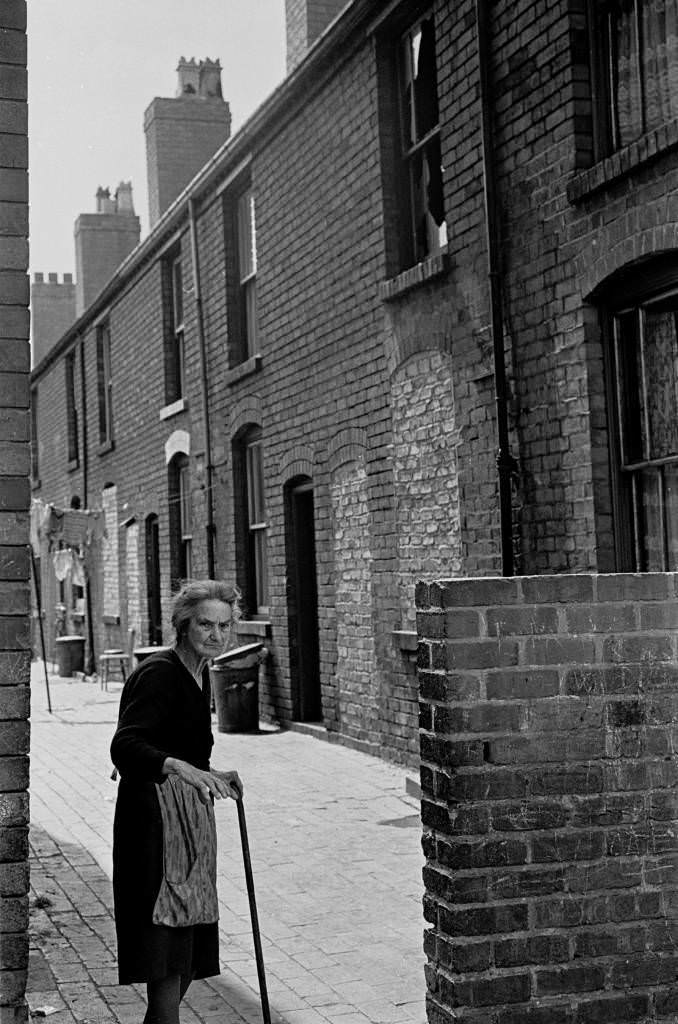
Brick terraces stretch away down the narrow street in Aston, their soot-darkened walls and tall chimneys forming a hard-edged backdrop to everyday life in 1971. In the foreground, an elderly woman pauses with a walking stick and a cloth bag, her stance steady but wary as she looks toward the camera. The angle draws the eye along the row of small front doors and repetitive windows, turning an ordinary residential lane into a quiet statement about housing and survival.
Signs of neglect sit plainly on the buildings: worn brickwork, patched surfaces, and upstairs windows that look damaged or poorly kept. The street itself is spare—bins, a few scattered items, and the sense of tight living conditions typical of inner-city terraces under threat of clearance. Details like these make the phrase “condemned property” feel immediate, reminding us that official labels often arrived long before families could realistically move on.
Taken together, the scene captures more than architecture; it hints at the human cost of urban change, where communities endured uncertainty alongside routine chores and familiar doorways. For readers searching for Aston history, Birmingham social history, or images of condemned housing in the early 1970s, this photograph offers a grounded, street-level view. It invites reflection on what it meant to remain in a home marked for demolition—holding on to place, neighbours, and dignity while the future closed in.