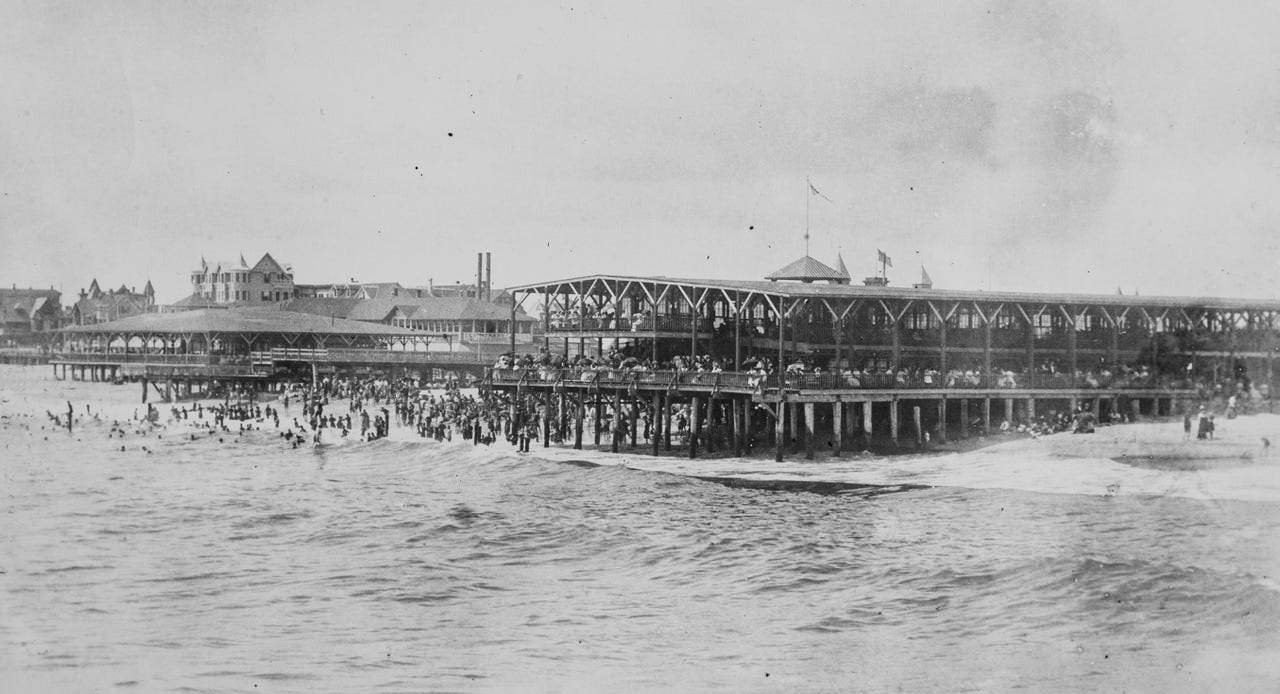
Stretching along the shoreline, the old wooden pavilion in Asbury Park dominates the right side of this 1901 scene, its long roofline and repeating supports casting a deep band of shade over the boardwalk. The Atlantic rolls in the foreground while crowds gather at the water’s edge, turning the surf into a lively, dotted pattern of bathers and onlookers. Behind the pavilion, the low skyline hints at a busy seaside resort built to welcome summer visitors. To the left sits the Ocean Grove Rose pavilion, smaller in scale but clearly part of the same coastal promenade culture that shaped New Jersey beach towns at the turn of the century. The paired structures read like landmarks for strolling, meeting, and escaping the sun—public spaces where architecture, leisure, and the ocean breeze came together. Details like the open framing, railings, and elevated decking emphasize how these pavilions were engineered to hover above sand and tide. What makes the photograph especially engaging is its sense of motion: waves pressing toward shore, people clustered in loose groups, and the boardwalk activity tucked beneath the pavilion’s canopy. For readers interested in Asbury Park history, Ocean Grove landmarks, or early boardwalk life, this view preserves a moment when seaside recreation was becoming a defining feature of the region. It’s a reminder that these wooden pavilions were more than buildings—they were stages for everyday summer life.
#13 The old wooden pavilion in Asbury Park to the right, 1901. The pavilion on the left was the Ocean Grove Rose pavilion