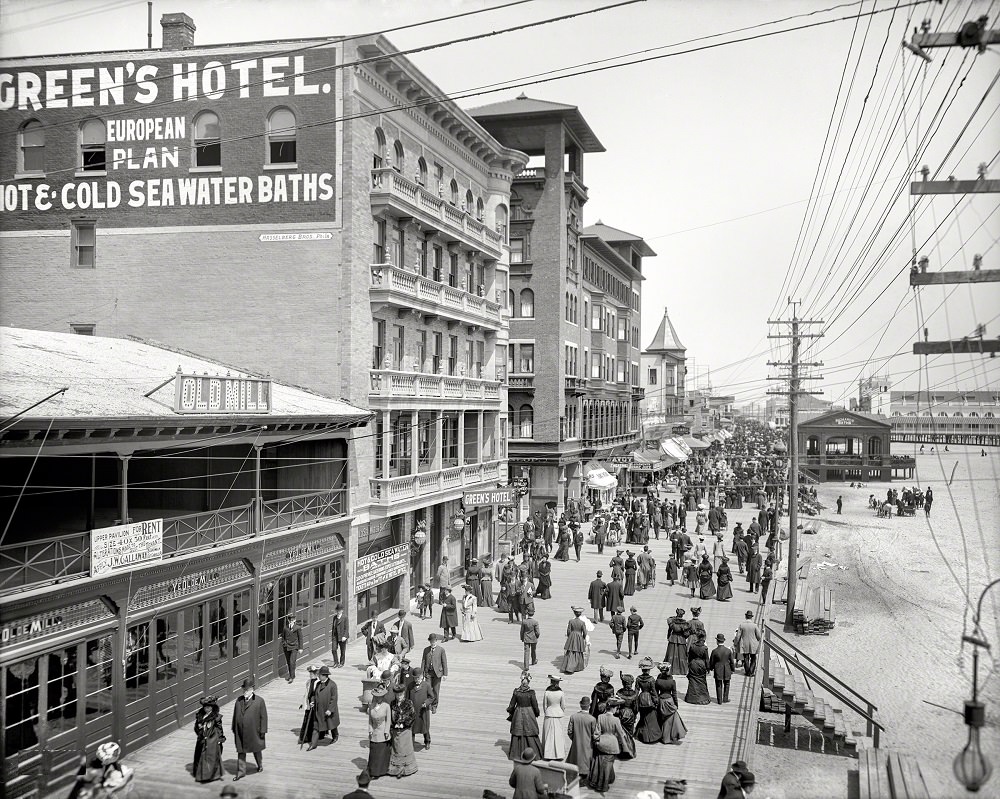
Along the Atlantic City boardwalk, Green’s Hotel looms large with bold painted advertising promising a “European plan” and “hot & cold seawater baths,” a reminder that leisure at the shore was already a carefully marketed experience in 1904. The hotel’s stacked balconies and busy storefront level create a strong vertical wall of architecture on the left, while the broad planks of the boardwalk pull the eye into the distance. Details like the awnings, signage, and decorative trim hint at a resort economy built as much on spectacle as on sea air. Crowds in formal dress—men in suits and hats, women in long skirts—fill the walkway in a steady stream, turning the promenade into a public stage for seeing and being seen. The mix of strolling couples, small groups, and passersby suggests a day when the simple act of walking the boards was entertainment enough, framed by shopfronts and hotel entrances. Even without individual identities, the scene feels intimate: a slice of everyday movement and conversation preserved in crisp detail. To the right, the open beach and a small pavilion-like structure sit beneath a web of overhead wires and utility poles, signaling how modern infrastructure was threading itself through seaside life. That contrast—sand and surf beside dense development—captures Atlantic City at a pivotal moment, when tourism, technology, and urban growth were reshaping the shoreline. For readers searching for Atlantic City history, the 1904 boardwalk at Green’s Hotel offers a vivid look at places and people in one of America’s most famous resort landscapes.