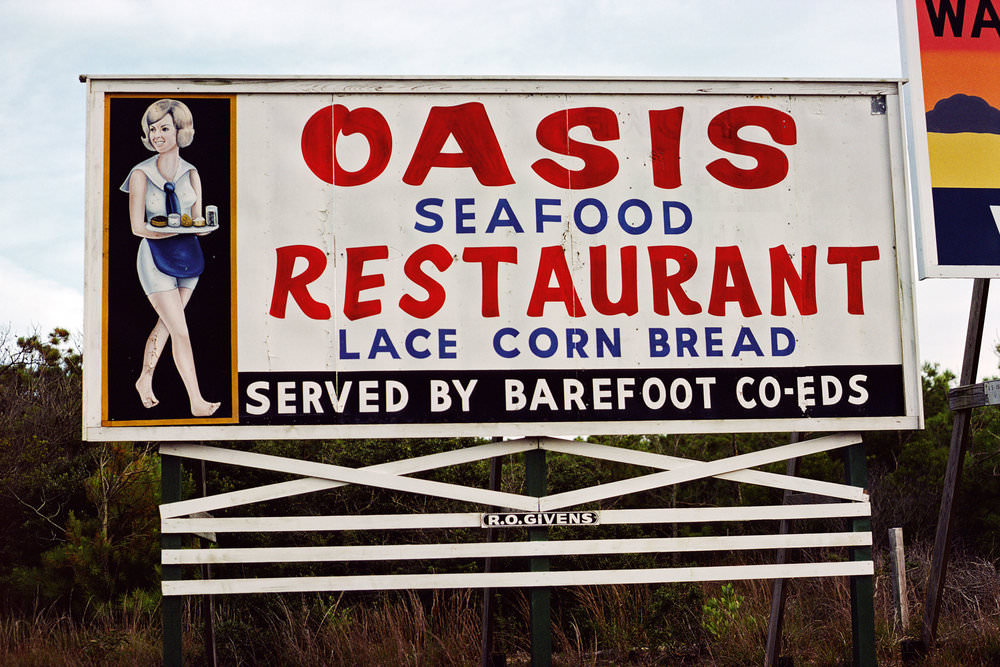
Along the roadside in Nags Head, a bold sign for “Oasis Seafood Restaurant” advertises the kind of Outer Banks summer that lives as much in memory as it does in sand and salt air. Big red letters promise seafood and “lace corn bread,” while a painted waitress in a short uniform carries a tray like a postcard from the mid-1970s. The slogan beneath—“served by barefoot co-eds”—lands with the cheeky marketing confidence of the era, instantly anchoring the scene in 1975 beach-town culture.
Bright, straightforward, and meant to catch a driver’s eye, the billboard doubles as a small archive of North Carolina coastal tourism. Its hand-painted style and playful illustration hint at a time before chain branding smoothed out local character, when dining spots competed with personality as much as menus. Even without showing the shoreline itself, the photo evokes that familiar vacation rhythm: sunburned afternoons, hungry evenings, and the promise of a hearty meal after a day on the beach.
For readers drawn to vintage Nags Head and Outer Banks history, images like this offer more than nostalgia—they reveal how “places & people” were packaged and sold in the summer of 1975. The scrubby dunes and low vegetation behind the sign frame it as a working landscape, poised between nature and commerce. Taken together, the title and this scene suggest a lively visual journey through North Carolina beach life, where roadside signs, local restaurants, and seasonal crowds became part of the coastal story.