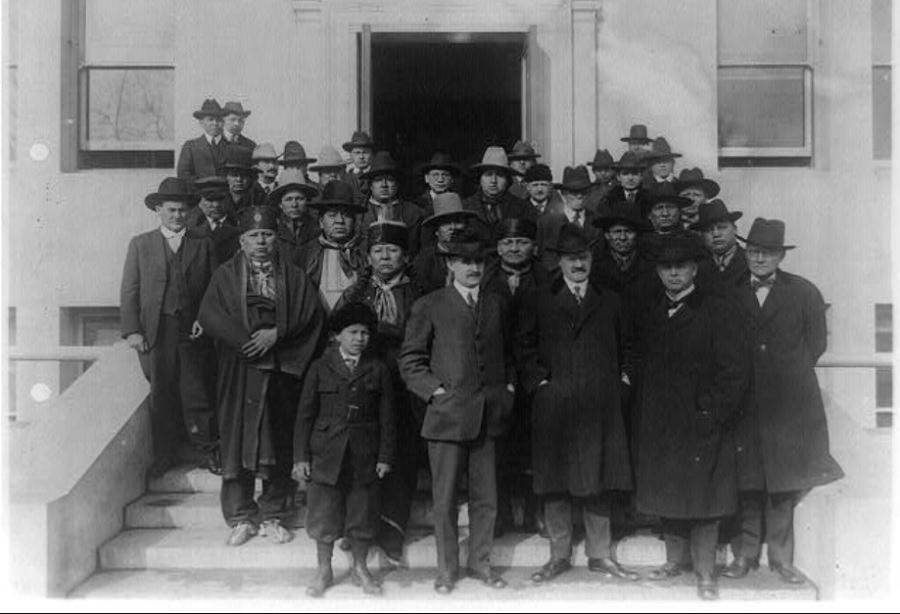
A tight cluster of men stands on the steps of a Washington, D.C. building, gathered in orderly rows beneath tall windows and an open doorway. Dark coats, brimmed hats, and layered scarves create a dense texture of winter-ready clothing, while the formal pose suggests a moment meant for the record rather than the casual snapshot. In the foreground, a child in a cap and heavy coat anchors the scene, a reminder that decisions made in distant offices could ripple outward into everyday family life.
The title identifies the group as the Osage Council and tribal representatives, placing this portrait within the long history of Indigenous diplomacy in the nation’s capital. Their presence in Washington points to negotiations, petitions, and meetings where sovereignty, resources, and rights were argued face-to-face with federal power. Even without knowing the exact occasion, the photograph conveys purpose—expressions set, shoulders squared, and attention directed toward the camera as if to say they were here, they were organized, and they expected to be heard.
For readers exploring Places & People, this image offers a vivid entry point into Native American history and the public life of tribal leadership beyond the reservation. It reflects how representatives navigated the expectations of official Washington—adopting formal attire, assembling in a disciplined group, and using photography as documentation and proof of participation. Whether you’re researching the Osage Nation, Indigenous delegations in Washington D.C., or the broader story of U.S.–tribal relations, this photograph invites a closer look at the human faces behind policy and paperwork.