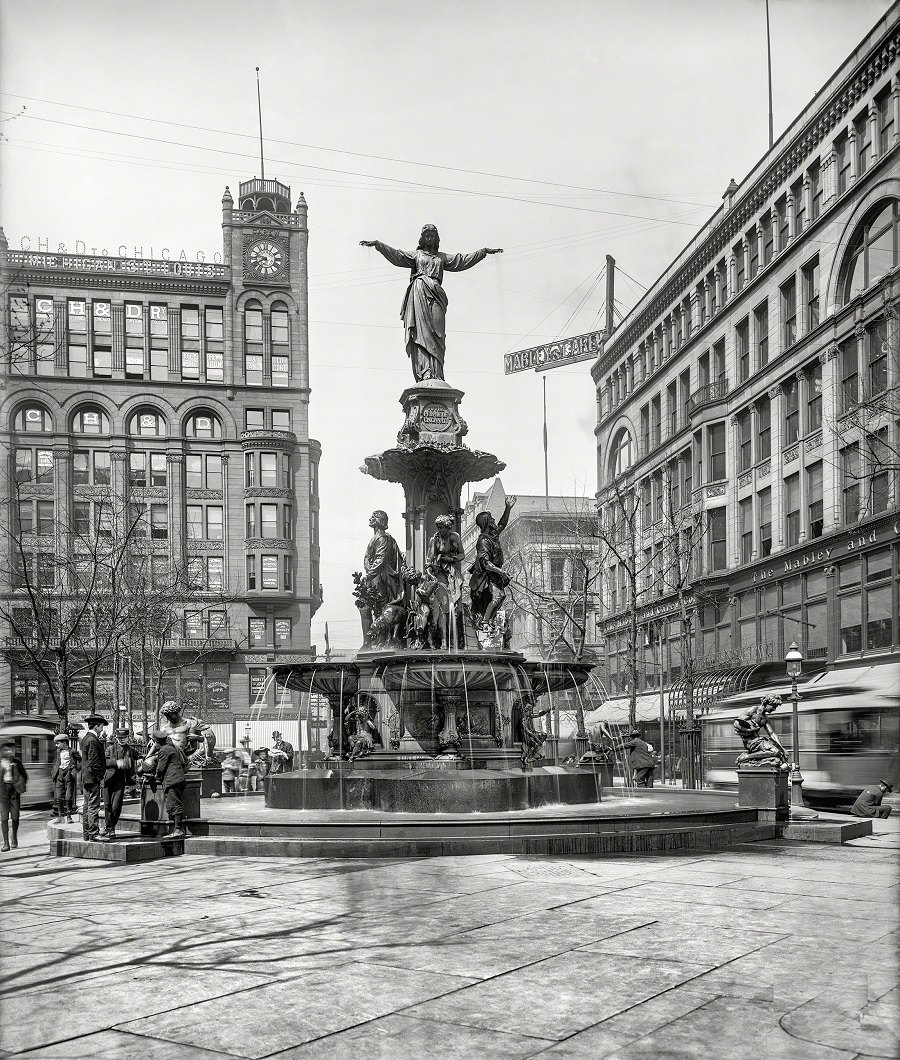
Rising from the center of Cincinnati’s bustling square, the Tyler Davidson Fountain stands like a civic stage set in stone and bronze. The outstretched figure at the top draws the eye upward, while clustered statues below gather around the basin, their forms framed by the steady fall of water. Even in a still photograph, the fountain suggests motion—spray, footsteps, and the everyday choreography of a city meeting point.
Around the monument, early-1900s downtown life presses in: multi-story commercial buildings with arched windows, a clock tower anchoring the left side, and streetcar wires crisscrossing the sky. A streetcar blurs past on the right edge, hinting at speed and modern transit, while pedestrians linger near the fountain’s rim. Bare trees and long shadows on the pavement add texture, placing this scene in a colder season and giving the streetscape a crisp, open feel.
For anyone searching Cincinnati history, Fountain Square, or the Tyler Davidson Fountain in 1904, this view offers more than architecture—it offers atmosphere. It captures the intersection of public art and urban commerce, where signage, storefronts, and transit lines orbit a shared landmark. The photograph reads as a portrait of place: a recognizable city center built for gathering, moving, and watching time pass.