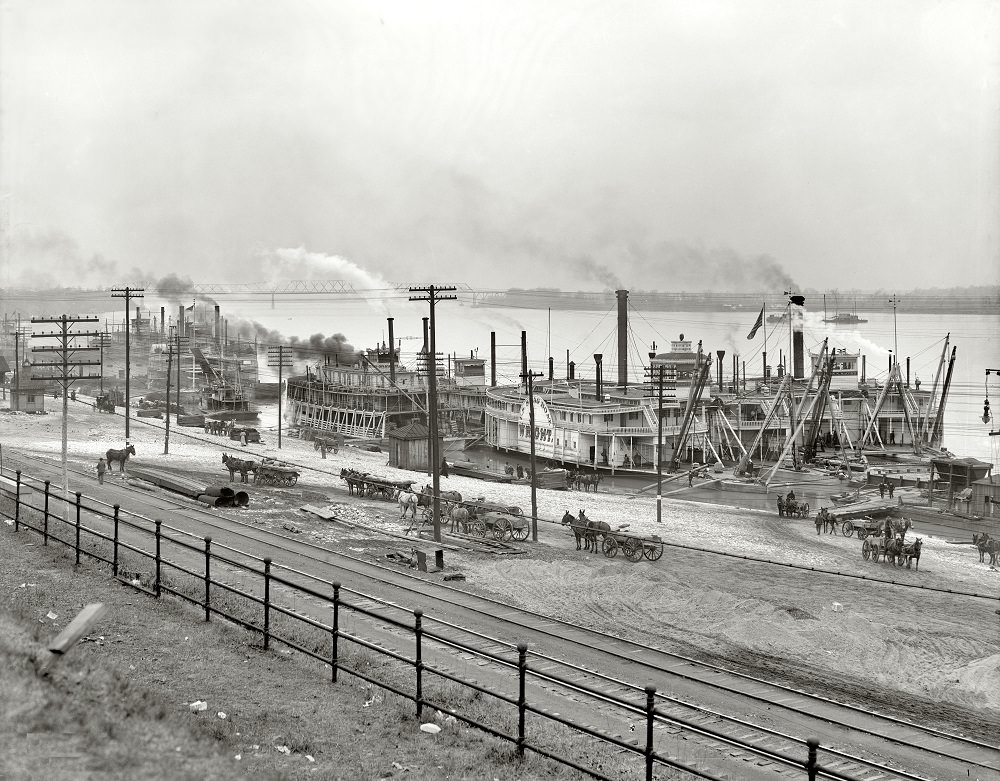
From a high bluff above the waterfront, the Mississippi River levee at Memphis stretches into a busy, smoke-hazed horizon in June 1938. The view looks down over rail lines and a broad workyard where wagons and teams of horses move through piles of material, giving the scene a grounded, working-day rhythm despite the expansive river beyond.
Along the river’s edge, a tight row of large steamboats and work vessels crowd the landing, their tall stacks and rigging rising in a forest of poles and cables. Plumes of smoke drift across the water, partially veiling the far bank and suggesting constant motion—loading, fueling, repairs, and the steady logistics that kept a major river port running. Utility poles, cranes, and shoreline structures fill in the industrial texture, emphasizing how closely transportation and commerce were woven together at the levee.
Seen today, the photograph reads as a vivid snapshot of the Memphis riverfront during a transitional era, when animal power, rail infrastructure, and steam-driven river traffic still overlapped in plain sight. For anyone searching for Mississippi River history, Memphis levee images, or 1930s waterfront life, the details reward a slow look: the layered shoreline, the crowded boats, and the everyday labor that shaped the city’s connection to its river.