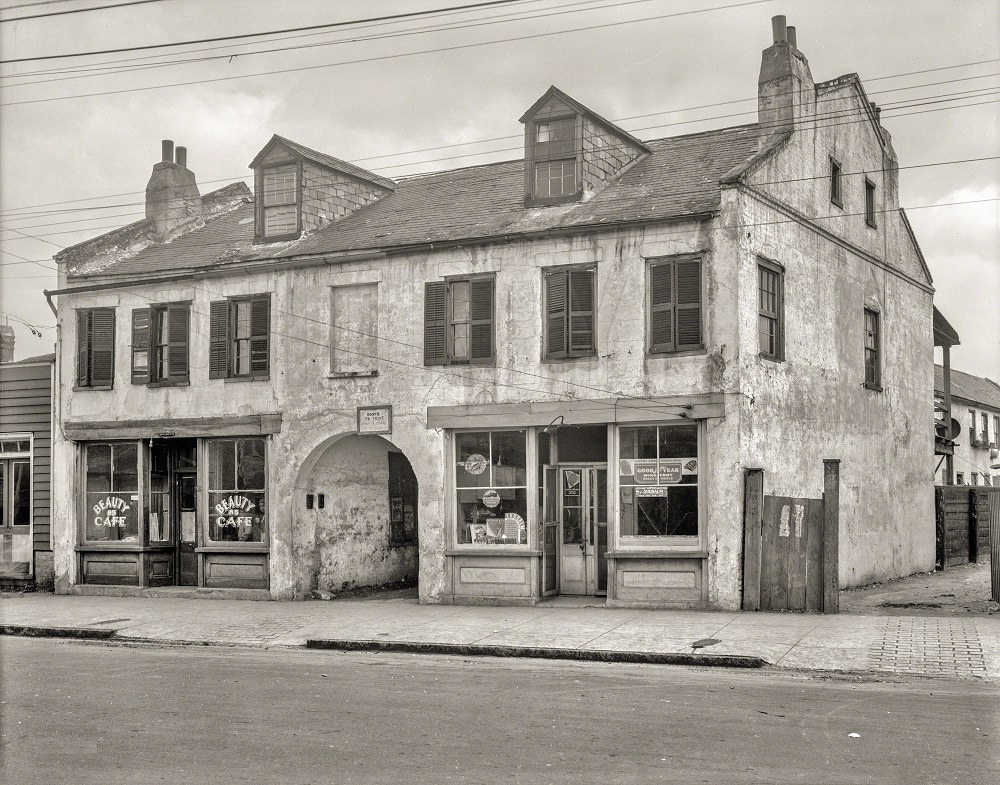
Weathered stucco and a low, slate-like roofline give this Calhoun Street tavern building a timeworn dignity, its dormer windows and chimneys hinting at an older Charleston beneath the 1930s storefronts. Painted window lettering for a “Beauty Cafe” sits beside a separate entrance, while an arched passageway cuts through the center—an inviting, practical feature that suggests foot traffic moving between street and yard. Overhead utility lines crisscross the sky, anchoring the scene in a modernizing city even as the façade holds onto earlier architectural habits.
On the ground level, the mix of shopfront glazing, signage, and recessed doorways reads like a small neighborhood hub where errands, meals, and conversation overlapped. The barred transom and posted notices in the right-hand windows evoke the everyday rules of commerce, while shuttered upper windows watch quietly over the street. Even without a crowd in frame, the building feels inhabited by routine: doors opened and shut, deliveries at the curb, and the steady pulse of Calhoun Street in Charleston.
Seen through the lens of 1937, the photograph offers a valuable record of Charleston street life and vernacular architecture at a moment when old structures were being adapted rather than replaced. Details such as the uneven plaster, the patched roof, and the layered storefront lettering provide clues for historians, preservationists, and anyone tracing the city’s built environment. For readers searching “Tavern, Calhoun Street, Charleston, 1937,” this image preserves a textured snapshot of places and people—told through brick, wood, glass, and the quiet choreography of a working street.