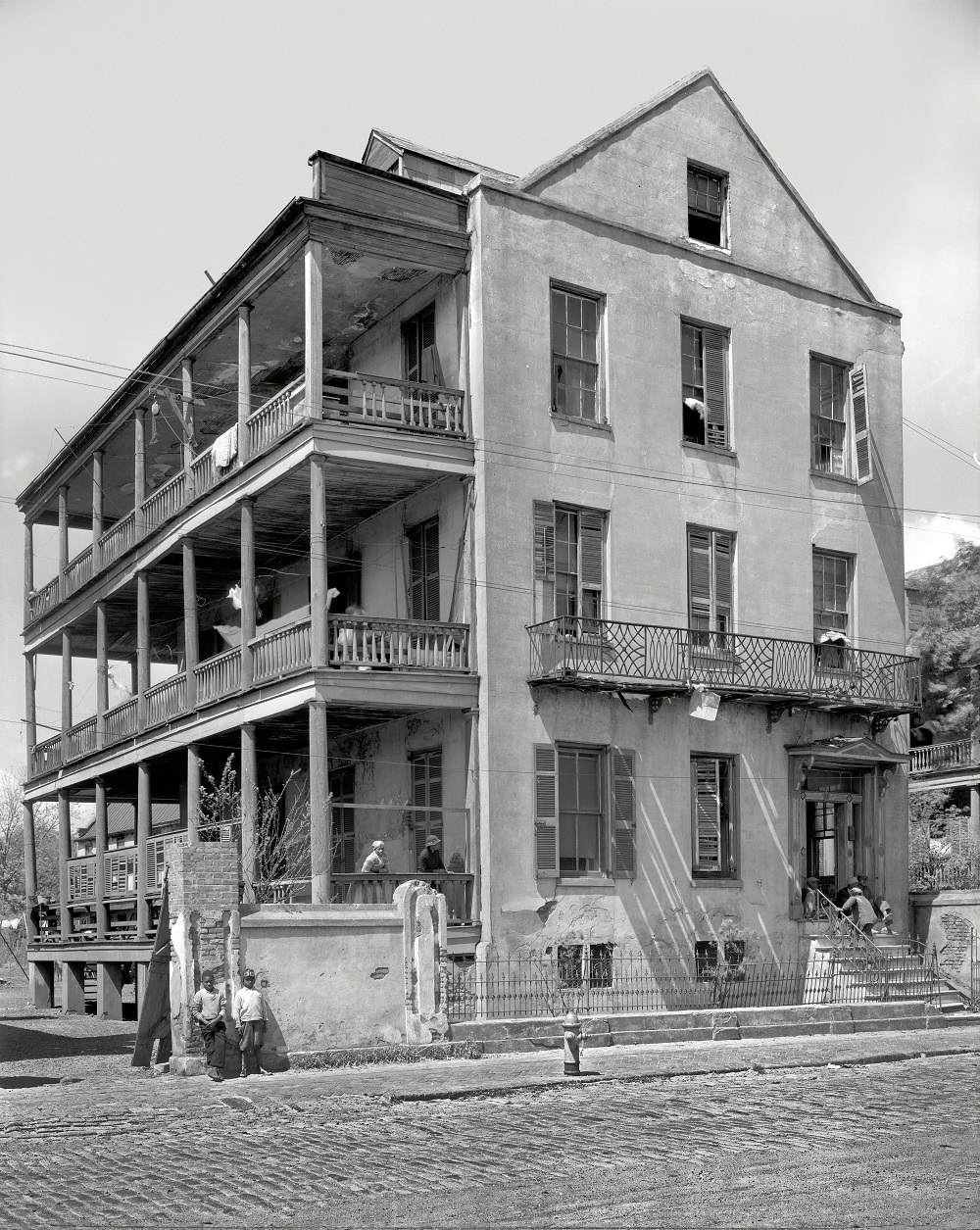
Rising above the cobblestones at 61 Washington Street, this Charleston building wears its age plainly: peeling plaster, weathered shutters, and a broad roofline that hints at earlier decades of coastal living. Three stacked piazzas on the left side create a rhythm of posts and railings, while a narrower ironwork balcony on the main façade adds a more delicate note. Overhead wires cut across the sky, a small reminder that modern utilities had threaded themselves into even the oldest streetscapes by 1937.
Life gathers around the structure in quiet, telling ways. Children linger near a low wall at the corner, and a few residents appear along the porch levels and near the entrance steps, turning architecture into a lived-in stage rather than a museum piece. Laundry draped over a railing, open windows, and uneven repairs suggest a busy tenement-like household economy—spaces adapted and re-adapted to meet the needs of the people inside.
Charleston history often gets told through grand churches and manicured gardens, but Washington Street offers a more intimate record of how the city actually worked day to day. The photograph’s mix of wood galleries, stuccoed masonry, and utilitarian street details makes it a valuable snapshot for anyone interested in Charleston architecture, urban neighborhood life, and the look of residential buildings in the 1930s. Look closely and you can almost hear the creak of porch boards, the murmur of conversation, and the steady pulse of a city enduring between preservation and change.