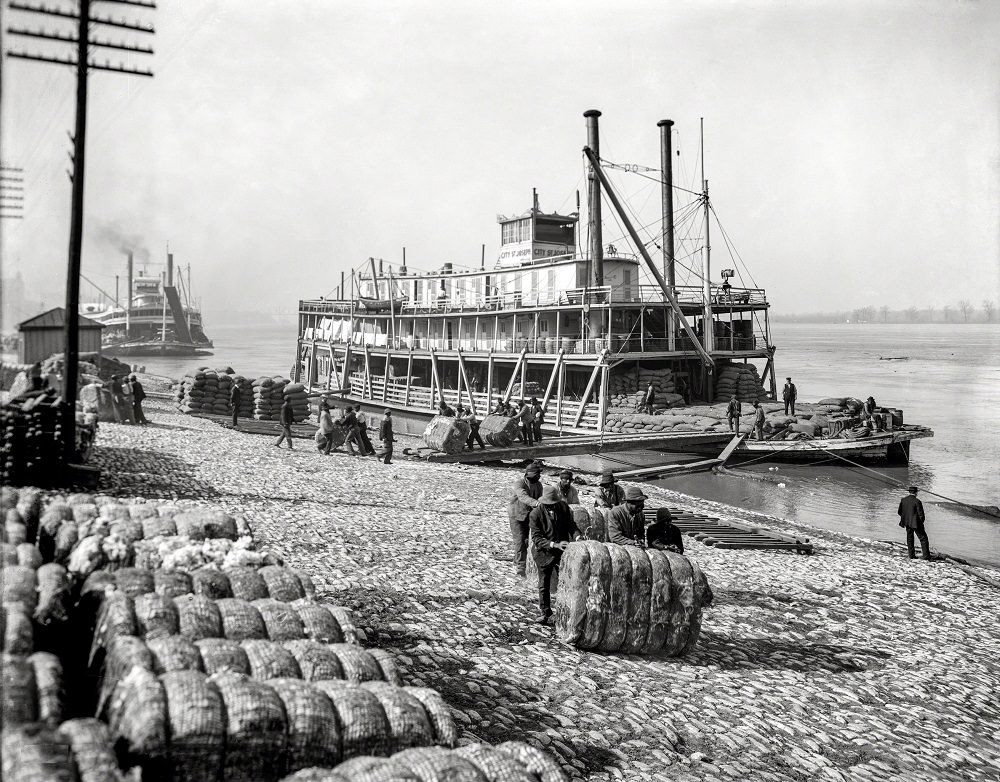
Moored along a cobbled riverfront, the sternwheeler City St. Joseph sits broadside to the Mississippi River with its multi-deck superstructure, tall stacks, and rigging rising over the busy landing. The boat’s name is visible on the pilothouse, and the long gangplank bridges water to shore, turning the vessel into a working extension of the dock. In the hazy distance, another steamboat and a faint plume of smoke hint at steady traffic on the river highway.
Down on the wharf, the scene is all muscle and routine: men cluster in small groups, some bent to their loads, others pausing as bales and sacks are shifted across the uneven stones. Piles of bundled freight dominate the foreground, stacked in repeating rows that emphasize the scale of commerce moving through this place. The river lies calm beside the landing, but the activity on shore suggests constant arrivals and departures.
Around circa 1910, sternwheelers like the City St. Joseph helped bind river towns to regional markets, carrying both people and goods between communities that looked to the Mississippi for connection and livelihood. Details such as telegraph poles, workboats alongside the hull, and the orderly geometry of the decks evoke an era when river transport still competed with rail lines for speed and reach. For readers interested in Mississippi River history, early 20th-century steamboats, and waterfront labor, this photograph offers a vivid “Places & People” glimpse into the everyday workings of a great American waterway.