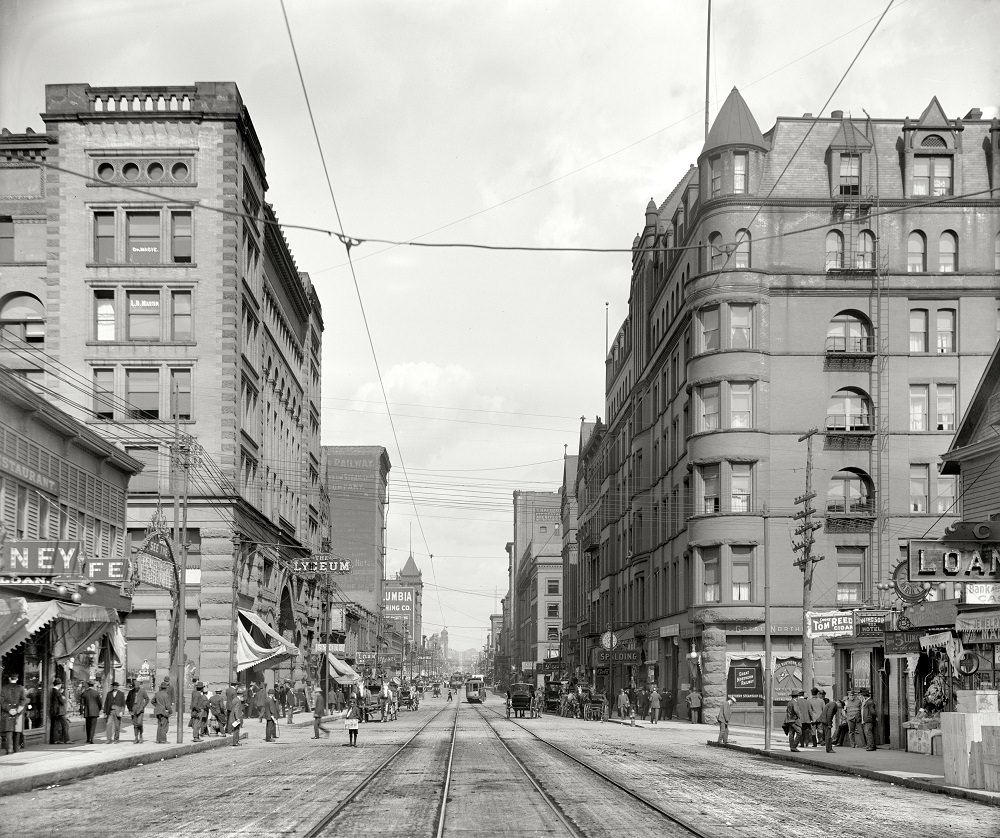
Superior Street in Duluth, seen in 1909, feels like a busy urban corridor where commerce and architecture compete for attention. Tall masonry buildings line both sides of the road, their windows stacked in neat rows, with a rounded corner façade and turret-like roofline drawing the eye on the right. Overhead, a web of wires crisscrosses the sky, hinting at an electrified streetcar city even before you notice the rails running straight down the center.
Street-level life is everywhere: pedestrians gather along the sidewalks, small clusters linger near storefronts, and wagons and early automobiles share the thoroughfare. Painted signs and bold lettering advertise businesses up and down the block, while awnings and display windows suggest a retail district built to catch the attention of passersby. The camera’s centered perspective emphasizes the long view down Superior Street, capturing the rhythm of a downtown that seems to stretch on without end.
For anyone interested in Duluth history, this photo offers a vivid look at how a Great Lakes city presented itself in the early twentieth century—dense, confident, and wired for modern transportation. It’s also a snapshot of everyday “places and people,” where clothing, street activity, and building details speak as loudly as any landmark. As a historical image of Superior Street, Duluth, it invites close reading: follow the tracks, scan the signs, and imagine the sounds of a working day in 1909.