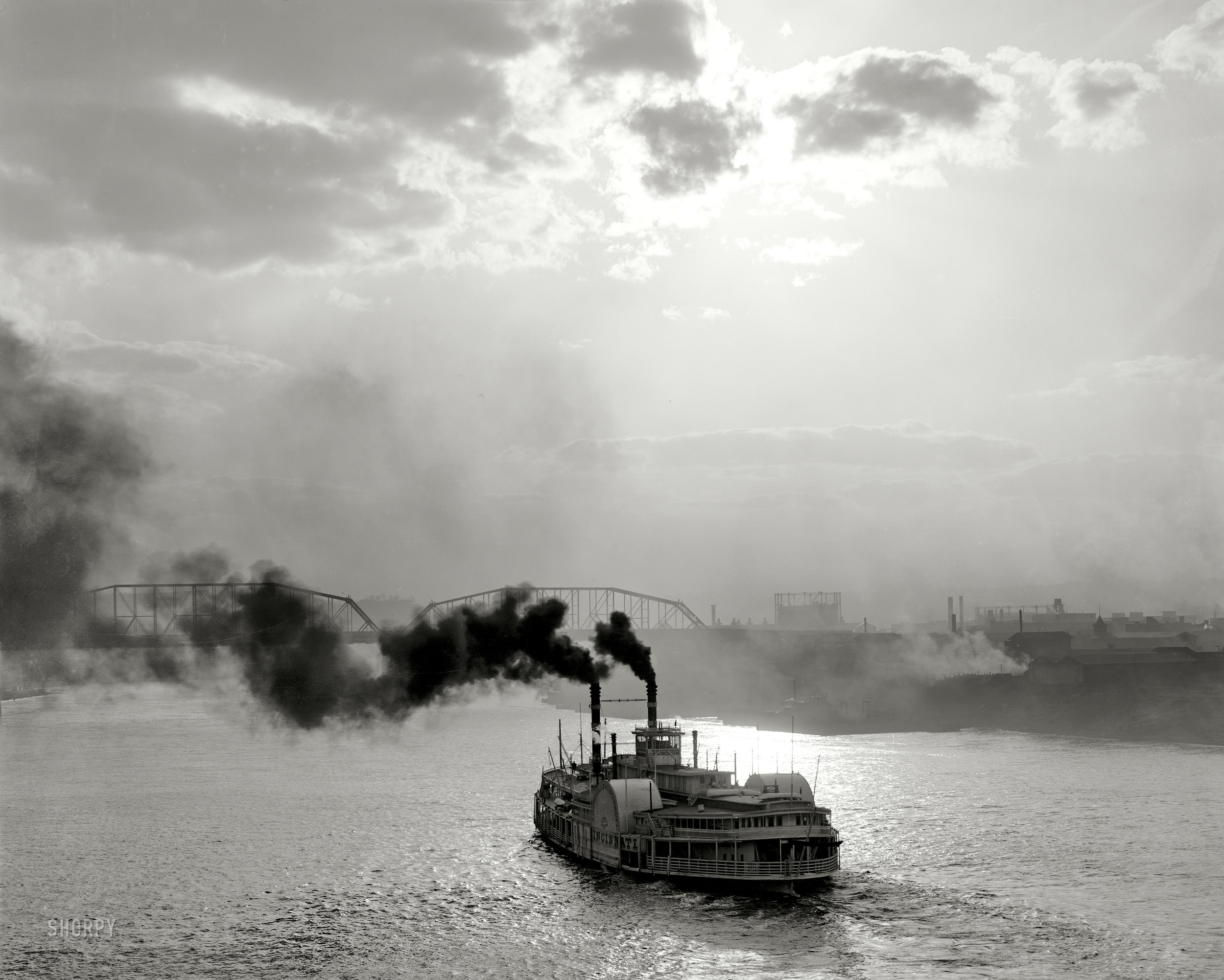
Late-day light spills across the Ohio River as a sternwheel steamboat pushes through the current, its twin smokestacks pouring a dark ribbon that cuts against a bright, clouded sky. Sun glare flashes on the water behind the boat, turning the wake into a shimmering path and emphasizing the river’s broad, working scale. The vessel’s layered decks and prominent paddlewheel speak to an era when river travel linked communities and commerce along this storied corridor.
In the distance, a truss bridge stretches low across the horizon, a steel silhouette that hints at the growing infrastructure of the early twentieth century. Beyond it, an industrial riverfront rises in softened outlines—chimneys, rooftops, and haze blending into one another—suggesting the busy towns that clustered along navigable waterways. Smoke and mist mingle over the channel, giving the scene a lived-in atmosphere that feels both energetic and subdued.
For anyone searching the Ohio River circa 1910, this photograph offers more than a scenic view; it captures the meeting of transportation, industry, and daily life on an American river highway. The steamboat’s steady progress and the looming bridge together mark a moment of transition, when older river traditions ran alongside modern engineering. “Places & People” fits here not through posed portraits, but through the working landscape that shaped how people moved, traded, and imagined the river itself.