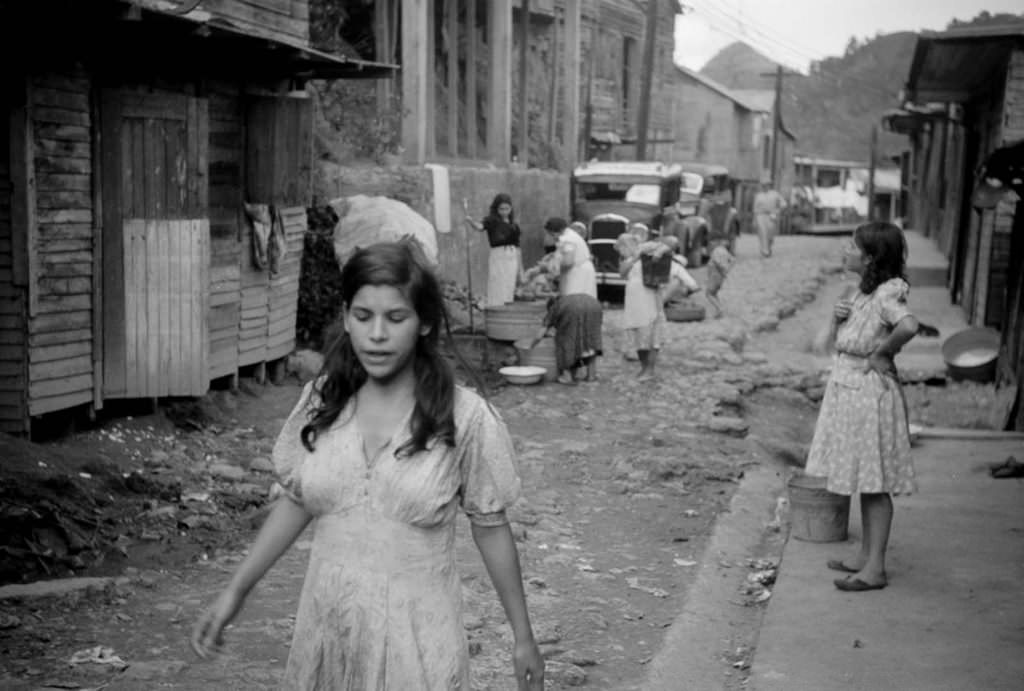
Along a rough, rutted road in Lares, wooden buildings press close to the street, their plank walls and simple doors suggesting shops and homes built for practicality. A young girl moves through the foreground while the street behind her opens into a small bustle of neighbors, buckets, and basins. The scene feels both intimate and communal, the kind of everyday moment that rarely makes it into official histories yet defines how a town is remembered.
Further down the lane, early automobiles sit parked in a line, a quiet reminder of changing times as older ways of moving and working still dominate the street. Women and children gather near the roadway, pausing between chores and conversation, with the irregular surface underfoot hinting at mud, stones, and the wear of constant use. In the distance, low hills frame the town, grounding the street life of Lares in the broader landscape that shaped its rhythms.
For readers interested in Puerto Rican local history, this photograph offers a textured look at “places & people” as lived experience rather than postcard scenery. Clothing, posture, and the arrangement of work tools in plain sight speak to routines—washing, carrying, waiting, watching—that organized daily life as much as any public event. As a historical photo of a street in Lares, it invites questions about housing, infrastructure, and community ties, encouraging us to linger over the details that make the past feel close.