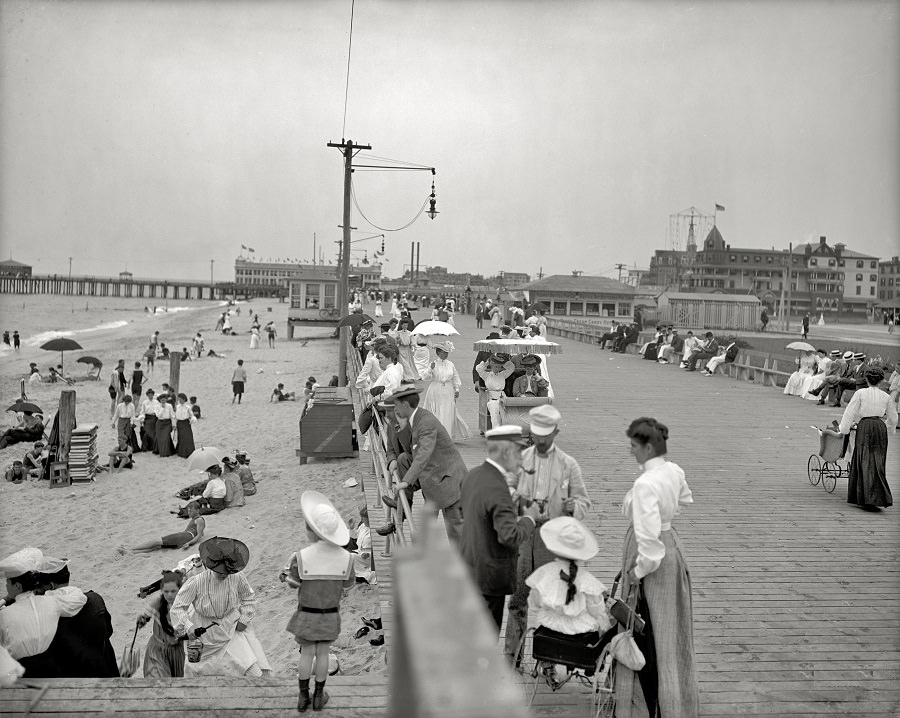
Stretching into the distance, the Asbury Park boardwalk in 1905 reads like a stage where seaside leisure and social ritual meet. Well-dressed visitors cluster along the rail, while others settle into rows of chairs facing the ocean, turning the promenade into an open-air parlor. Out on the sand, scattered umbrellas and small groups suggest a beach day that’s as much about being seen as it is about swimming. Along the shoreline, the surf looks busy but orderly, with bathers and onlookers occupying their own zones of activity. The wooden planks underfoot, the simple railings, and the tall utility pole with its hanging fixture hint at the infrastructure required to make a resort town comfortable and connected. In the background, a pier and substantial buildings anchor the scene, reinforcing Asbury Park’s identity as a destination built around the waterfront. Details like wide-brimmed hats, long dresses, and the presence of attendants and seating give the photograph its period character, underscoring how early 20th-century fashion shaped movement and manners in public spaces. As a piece of New Jersey history, it offers a vivid snapshot of boardwalk culture—crowds, coastline, and the rhythms of a day at the shore—captured at the moment when modern seaside tourism was becoming a defining American pastime.