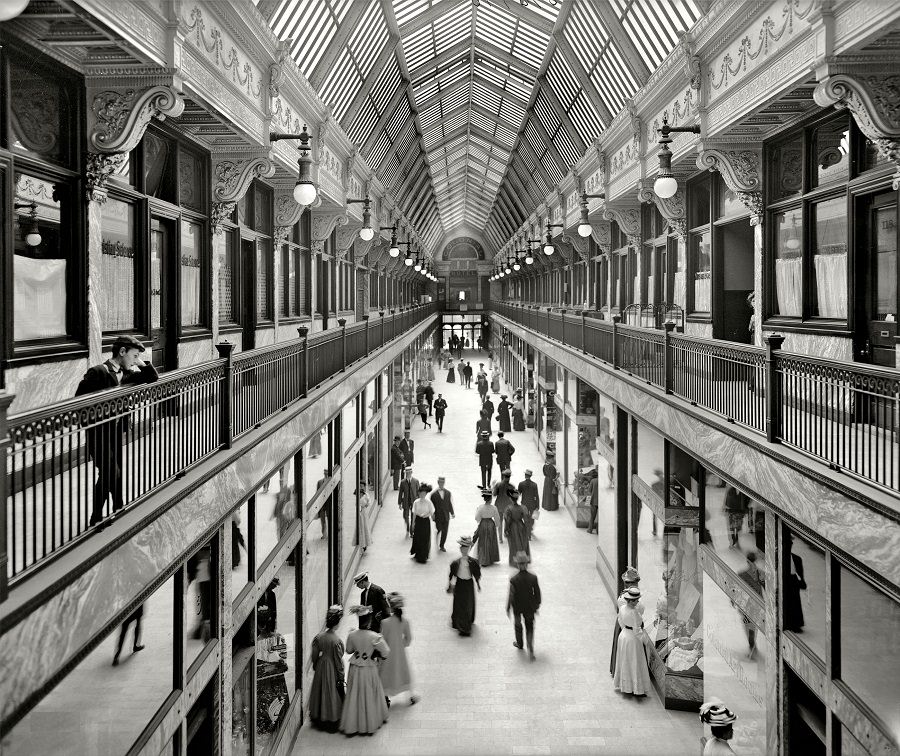
Beneath a long, ribbed glass ceiling, Cleveland’s Colonial Arcade unfolds like an indoor boulevard, its symmetry pulling the eye toward the bright opening at the far end. Ornate plasterwork curls around the upper-level storefronts, while a tidy row of globe lamps marches down the corridor, suggesting a space designed to feel both grand and practical. Shop windows line both floors, turning the passage into a showcase of early 20th-century retail architecture.
On the tiled walkway below, everyday motion gives the scene its life: shoppers and clerks drift past display cases, women in long skirts and wide hats pausing as others thread around them. A few figures linger at the railings on the mezzanine, looking down as if the arcade itself were a kind of theater. The mix of purposeful strides and unhurried browsing hints at how these enclosed downtown passages helped shape the rhythm of city commerce.
Around circa 1908, places like this offered Clevelanders a protected, well-lit alternative to the street—part shopping corridor, part social promenade, and part statement of modern building technology. The vaulted skylight and layered balconies speak to an era when urban development celebrated light, ornament, and density in the same breath. For anyone interested in Cleveland history, historic shopping arcades, or the texture of daily life in the early 1900s, this view of the Colonial Arcade is a compelling window into “Places & People.”