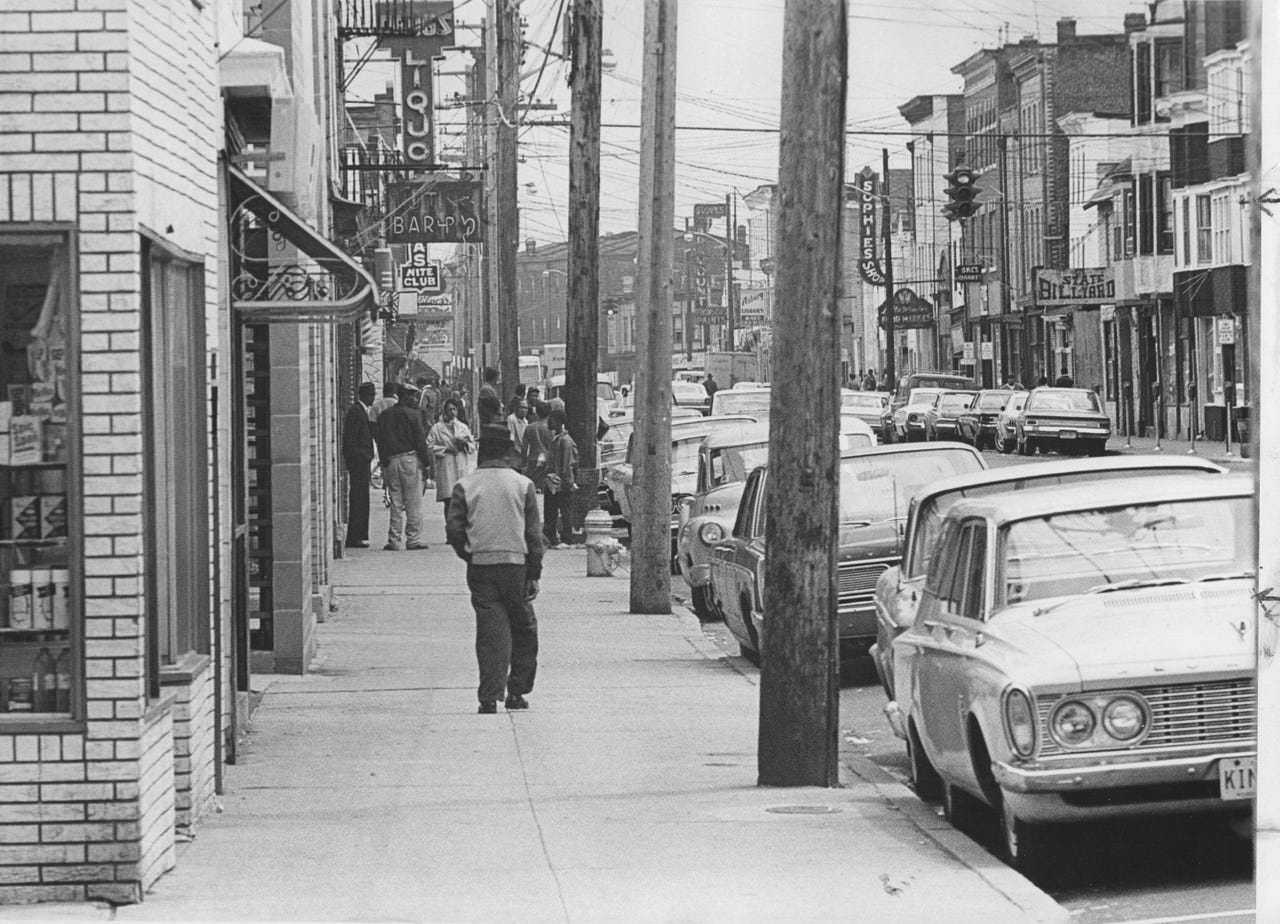
Springwood Avenue in Asbury Park feels busy and close-knit here, with a long view down the sidewalk where neighbors gather in small knots and a lone figure walks toward the camera. Parked cars crowd the curb, utility poles march in a tight line, and overhead wires stitch the street together, giving the scene that unmistakable mid-century urban rhythm. Storefronts hug the pavement, their windows and doorways creating a continuous streetscape that invites the eye deeper into 1968. Signage tells its own story of commerce and nightlife—vertical blades and painted boards for bars, clubs, and billiards compete for attention above the heads of passersby. The architecture reads as practical and hardworking: brick facades, narrow buildings, and closely spaced businesses that suggest a corridor built for daily needs as much as for evening entertainment. Even without sound, you can almost imagine the mix of conversation, traffic, and music that would have drifted along this stretch. For anyone searching Asbury Park history, Springwood Avenue 1968 offers a grounded look at “places and people” in motion, documenting how a neighborhood business district actually functioned on an ordinary day. Details like the street’s density, the period automobiles, and the layered storefront signs make it a valuable reference point for local memory and urban change. It’s a reminder that history often lives in the everyday—on sidewalks, under awnings, and in the shared space between shop doors and the curb.