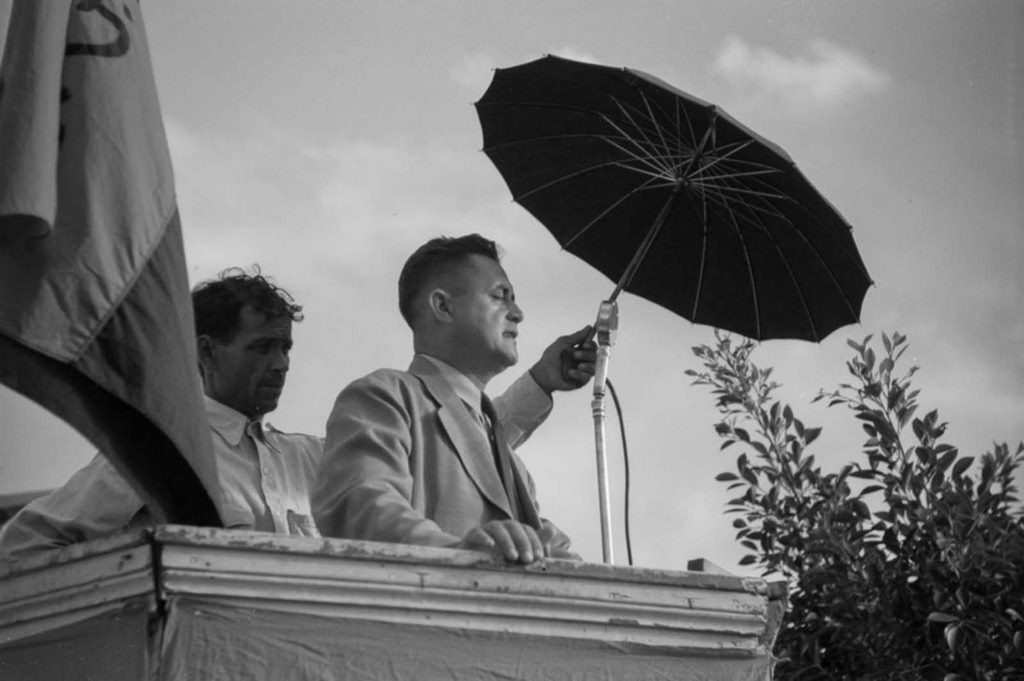
Beneath an open umbrella, the mayor of Yabucoa leans into a microphone from a raised platform, his posture steady and formal as he addresses the town plaza below. Another man stands just behind him, half in shadow, while a large flag drapes into the frame at the left—quiet symbols of authority and civic ritual. The bright sky and nearby treetops soften the scene, yet the mood remains focused, as if every word is meant to carry.
Striking workers gathered in the square are not visible here, but their presence is unmistakable in the way the speaker projects outward, hands set on the ledge as though anchoring himself to the moment. The image hints at a public confrontation that is also a negotiation: municipal leadership facing organized labor in a shared civic space. Details like the simple wooden railing, the portable microphone stand, and the improvised shade suggest a community meeting shaped by urgency rather than ceremony.
For readers interested in Puerto Rico history, labor movements, and the politics of everyday life, this photograph offers a vivid glimpse of how disputes over work and wages entered the heart of the town. Yabucoa’s plaza becomes more than a backdrop—it functions as a stage where power is performed and contested in public view. As a “Places & People” document, it preserves the atmosphere of a strike not through slogans or banners, but through the tense calm of an address delivered to a crowd determined to be heard.