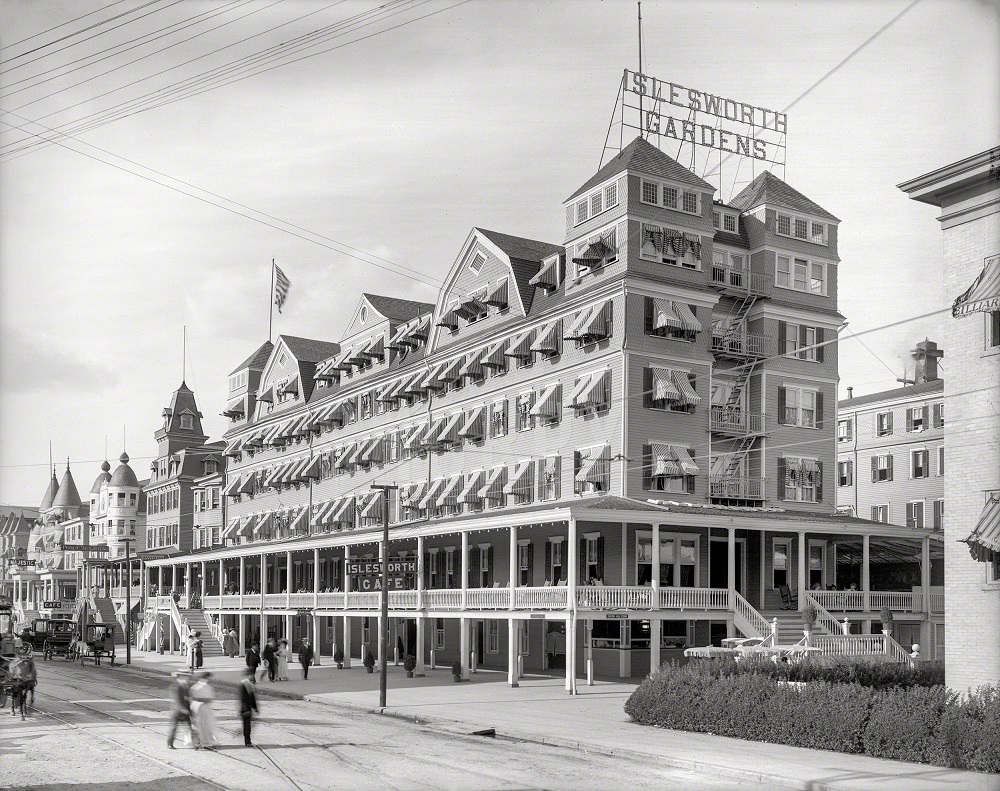
Rising above the street with a bold rooftop sign for “ISLES WORTH GARDENS,” the Hotel Islesworth stands as a classic example of Atlantic City’s early resort-era ambition in 1901. Rows of striped awnings march across the long façade, and wide verandas wrap the lower floors, suggesting an emphasis on fresh air, promenade views, and the steady rhythm of seasonal guests arriving for the shore. Architectural details reward a closer look: varied rooflines, corner towers, and generous windows break up the hotel’s length, while exterior fire escapes hint at the practical realities of operating a large wooden seaside property. At street level, the “ISLES WORTH CAFE” signage signals a bustling ground-floor social world, where dining and people-watching were as much a part of the Atlantic City experience as the ocean itself. Along the avenue, pedestrians and nearby storefronts place the building within a lively urban resort landscape shaped by rail travel, electricity, and the growing popularity of coastal vacations. For anyone researching Atlantic City history, boardwalk-era hotels, or the changing face of American leisure, this photograph offers a grounded, street-side view of how grand hospitality looked—and functioned—at the start of the 20th century.