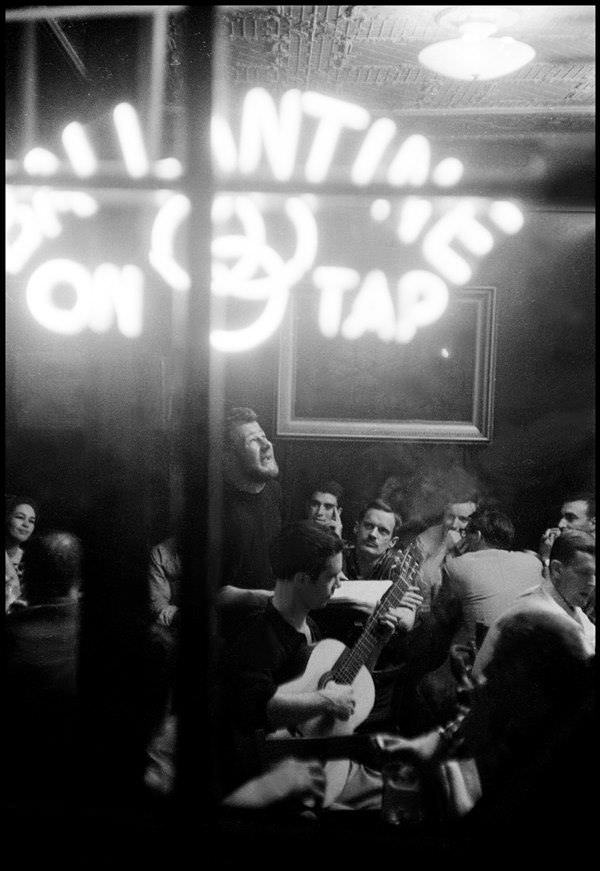
Neon letters glow through a window—“INT…” and “ON TAP” reading like a bright, hazy curtain—while the real story unfolds inside the crowded saloon. In the dim, smoke-softened room, a small knot of patrons leans in close around a seated guitarist, and faces emerge from shadow in that unmistakable mid-century bar light. The scene feels less like a stage and more like a shared moment, where music rises from a corner and pulls everyone’s attention toward it.
At center, Hugh Nanton Romney sings at McSorley’s in 1959, his expression turned upward as if reaching for a chorus above the clatter of glasses. The guitar’s rounded body catches what little light there is, anchoring the composition amid the press of shoulders and the half-seen movement of a busy night. You can almost hear the room: murmured conversation, a rhythmic strum, and the hush that comes when a song lands.
Later, Romney would take the name “Wavy Gravy” and become known as a lifelong peace activist, giving this intimate performance the texture of an origin story. It’s a compelling slice of American folk-era nightlife—part Places & People, part cultural prelude—where a future public voice is still simply a singer among regulars. For readers searching for McSorley’s history, 1950s bar culture, or early glimpses of Wavy Gravy before the wider spotlight, this photograph offers a vivid doorway into that world.