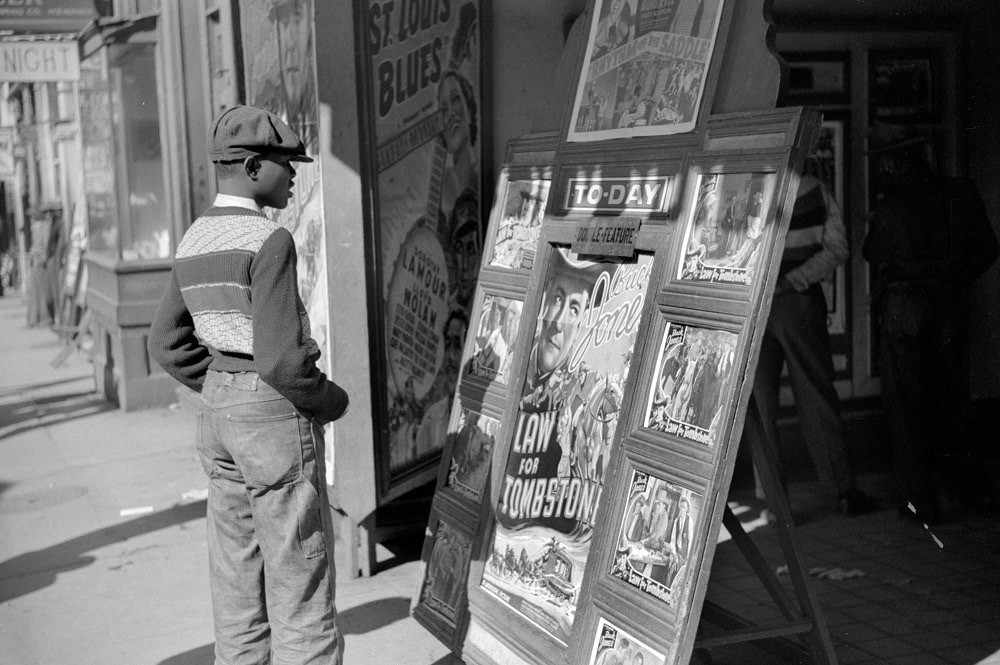
On a Memphis sidewalk in June 1936, a young passerby pauses outside a theater entrance, hands tucked in his pockets, studying the display board of movie scenes and promises. The street-level viewpoint draws you into everyday life during the Depression era—workaday clothes, a quiet moment of decision, and the simple luxury of a matinee.
At the center stands a bold poster for “Law for Tombstone,” flanked by smaller stills under a “TO-DAY” header, turning the storefront into a miniature gallery of cinema advertising. Just beyond it, larger billboards hint at other attractions, including a “St. Louis Blues” notice and additional illustrated promotions, stacking sound, story, and spectacle into a single block of visual noise.
Memphis, Tennessee, comes through here not as a landmark but as lived space—brick, glass, shadows, and the rhythms of people moving past entertainment, commerce, and curiosity. For readers interested in 1930s American history, Southern city street scenes, or the look of vintage movie marketing, this photograph offers a richly textured glimpse of “Places & People” exactly as the title suggests.