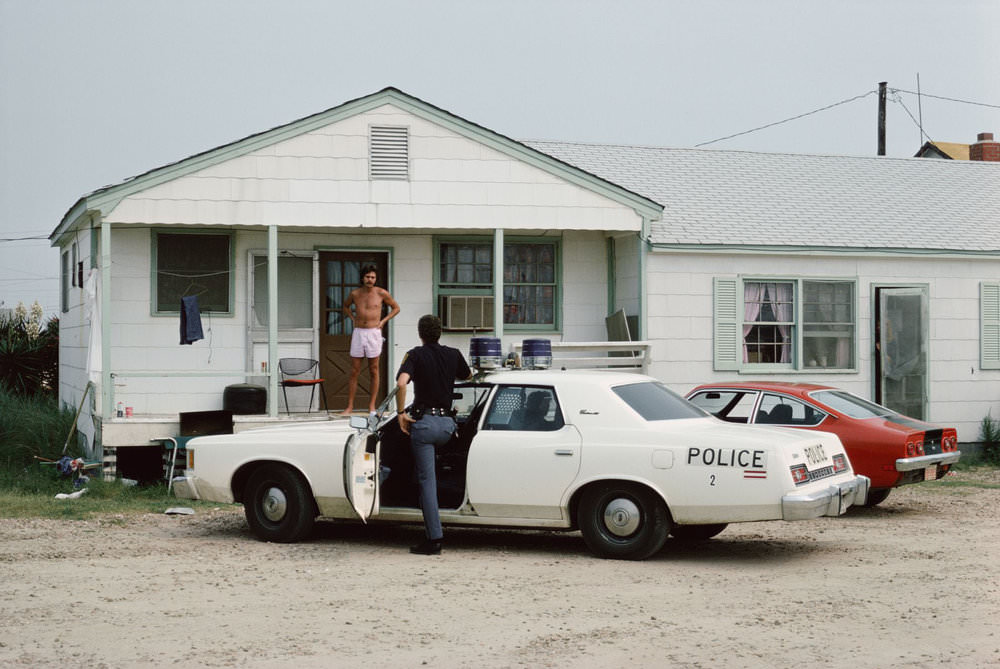
A low, weathered beach cottage sits back from a sandy lane, its pale siding and mint-trim shutters catching the washed-out coastal light. Parked tight to the porch is a white police car with its door open and roof lights visible, while a red coupe waits just behind it—everyday vehicles that instantly anchor the scene in the 1970s. On the steps, a man in shorts stands in the doorway as an officer faces him, suggesting a brief, ordinary exchange rather than high drama, the kind of moment that rarely makes postcards but often defines real summers.
Set against the promise of Nags Head and the Outer Banks in the summer of 1975, the photograph leans into “Places & People” in the most literal way. The details—screened windows, a porch chair, a towel draped to dry—hint at rental-week routines, humid afternoons, and salty air that clings to everything. Even the unpaved ground and close-set houses speak to a shoreline community still feeling small-town, before later waves of development reshaped the look and pace of North Carolina beach life.
For readers drawn to vintage Nags Head photos, this image offers more than nostalgia; it’s a snapshot of how coastal towns worked day to day, with law enforcement, visitors, and locals sharing the same narrow streets. The mood is candid and lived-in, capturing a fleeting pause between beach hours and whatever business brings a patrol car to a cottage porch. As part of a larger set of 1975 beach images, it helps round out the story of the Outer Banks beyond surf and sunshine—one quietly human moment at a time.