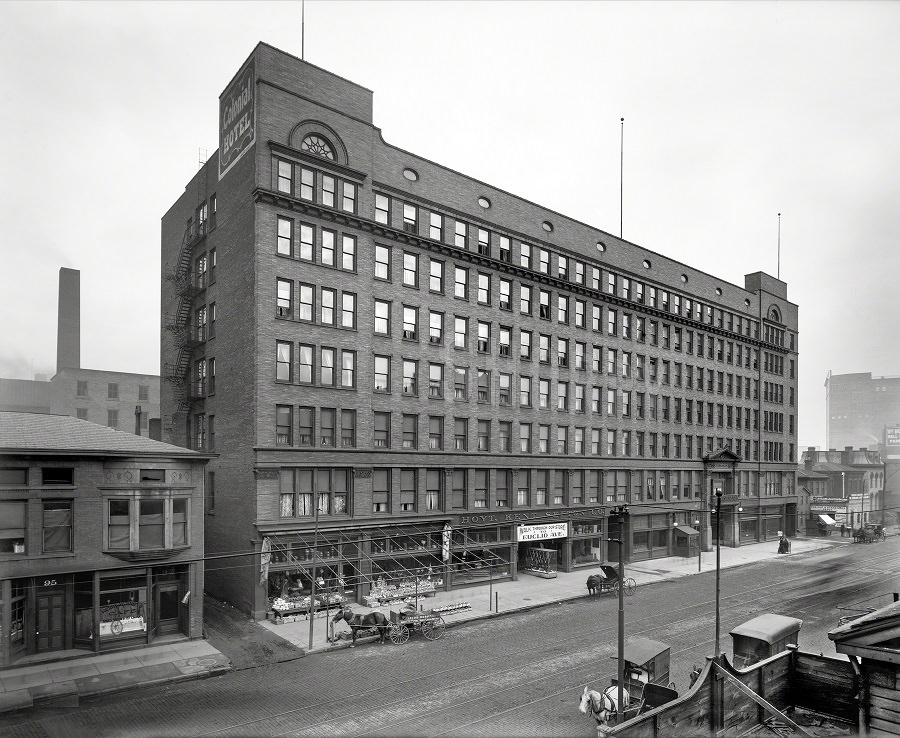
Rising above the low storefronts around it, the Colonial Hotel dominates this Cleveland streetscape with a long brick façade, repetitive rows of windows, and a rooftop sign that would have been visible to anyone approaching the district. Architectural touches—arched windows near the upper stories, tidy cornice lines, and narrow fire escapes along the side—hint at the blend of practicality and pride that marked big-city building at the turn of the century.
Down at street level, the scene becomes more intimate: shop windows sit beneath the hotel’s bulk, pedestrians move along the sidewalk, and horse-drawn wagons occupy the roadway, tying everyday commerce to the larger story of urban growth. The signage, awnings, and orderly storefront rhythm suggest a neighborhood built to serve travelers and locals alike, where lodging, retail, and street traffic met in the same block.
As a historical photo, “Colonial Hotel, Cleveland, 1900” offers a clear snapshot of how Cleveland looked and worked in an era when brick, rail, and industry were reshaping American cities. For readers interested in Cleveland history, vintage downtown architecture, and early hotel life, the image preserves the texture of an older streetscape—busy, transitional, and unmistakably modern for its time.