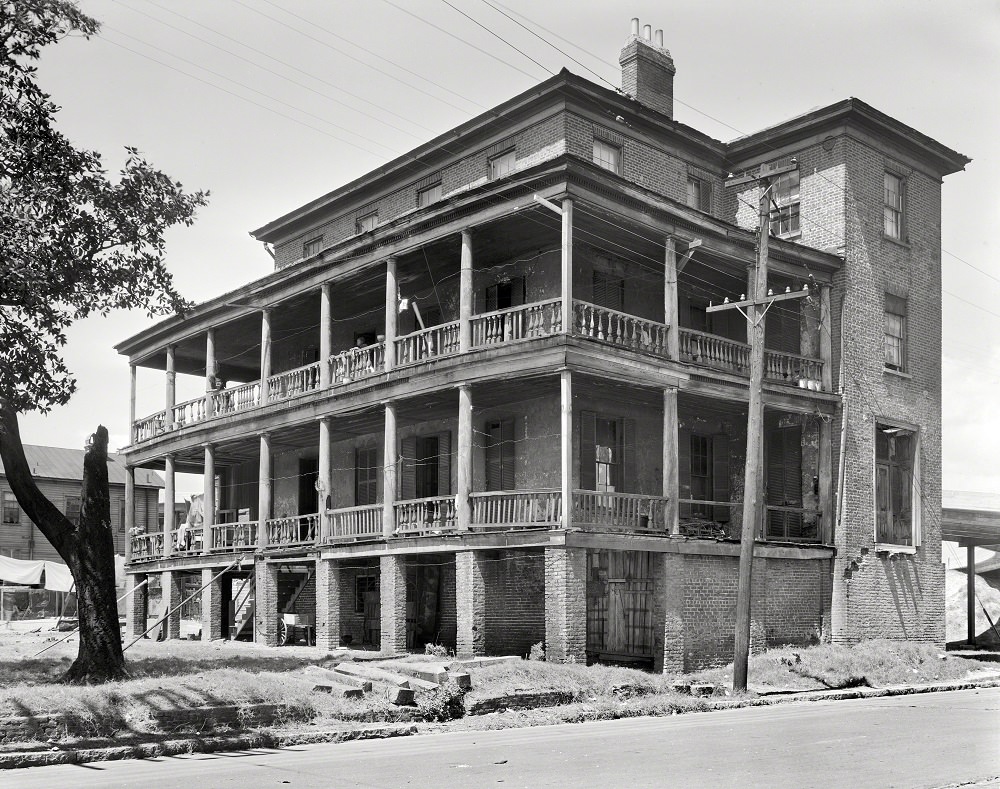
At 727 Bay Street in Charleston, the year 1937 finds a substantial brick residence standing tall above the street, its deep, two-tiered porches wrapping the corner with a steady rhythm of posts and railings. The broad eaves and prominent chimney add weight to the roofline, while open shutters and varied window sizes hint at many rooms within. Overhead utility lines cut across the sky, a quiet reminder of modern infrastructure threading through an older streetscape.
Along the galleries, everyday signs of occupancy soften the building’s formal façade—chairs, hanging items, and shadows beneath the porch roof suggest people moving in and out of view. The raised foundation and enclosed ground level create a layered look common to Charleston architecture, balancing ventilation and elevation with practical storage space. Weathering on the woodwork and the patchwork of brick and timber details tell a story of use, repair, and adaptation rather than museum-like preservation.
Bay Street itself frames the scene with a curbside strip of grass, a leaning utility pole, and a stark tree trunk that anchors the foreground. As a historic photo of Charleston in 1937, this view offers more than a single address: it evokes neighborhood life, building traditions, and the way Southern coastal homes were shaped by climate and community. For anyone researching Charleston history, local architecture, or the changing texture of Bay Street, the image preserves a moment when place and people were inseparable from the porch.