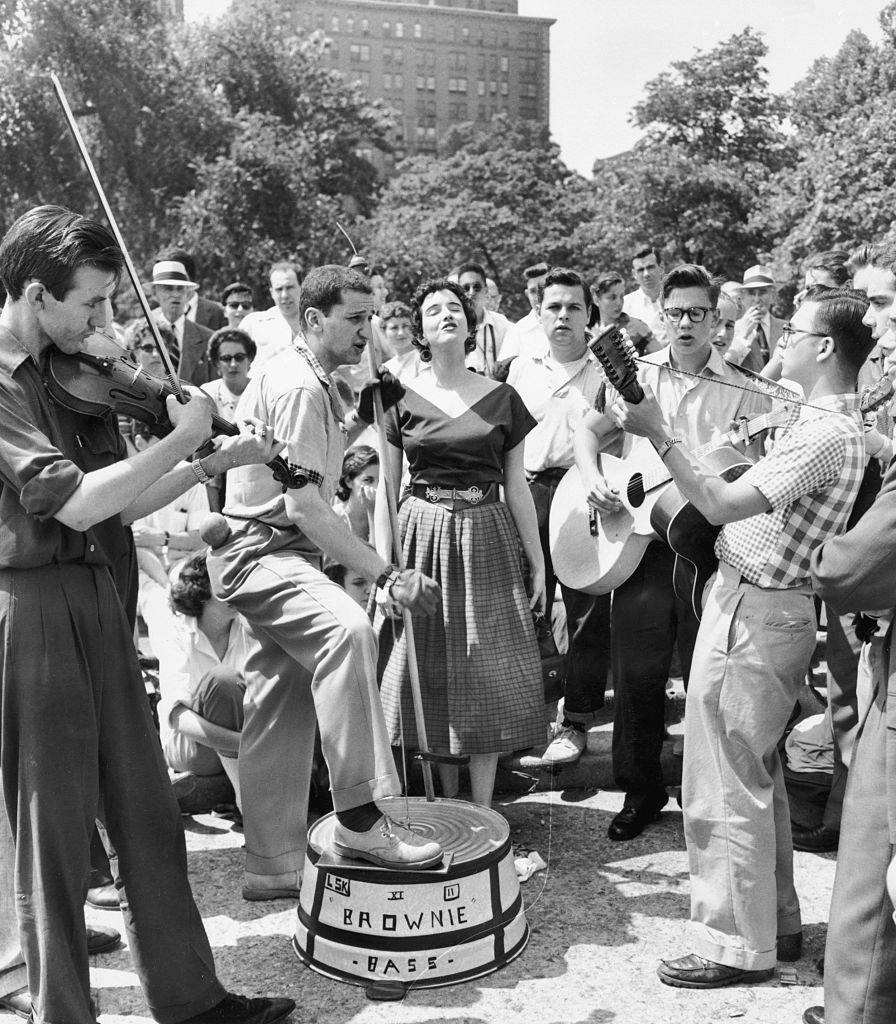
Summer light and a dense ring of onlookers set the stage as an Army veteran works a homemade “Brownie Bass” in New York City during the 1950s. One foot planted on the drum-like body of the instrument, he leans into the rhythm with the easy confidence of a street performer who knows exactly how to hold a crowd. Around him, faces turn inward from every direction, creating a pocket of attention in the middle of the city’s daily rush.
Alongside the Brownie Bass, a small ensemble comes into focus: a violinist bowing at the edge of the frame, a guitarist strumming close by, and a singer at center with eyes lifted mid-phrase. The casual shirts, rolled sleeves, and patterned skirt feel distinctly mid-century, while the mixture of standing and seated spectators suggests an impromptu concert that has grown by the minute. Even without hearing a note, the photograph conveys tempo—hands poised, mouths open in song, and bodies angled toward the beat.
Behind the crowd, leafy trees and tall apartment buildings hint at a familiar New York park setting, where public space doubled as a stage long before playlists and portable speakers. The scene is a vivid reminder of how veterans and working musicians shaped the city’s soundscape, turning sidewalks and pathways into places of shared entertainment. For readers interested in 1950s New York City history, street music, and everyday postwar life, this image offers a grounded, human-scale look at culture in motion.