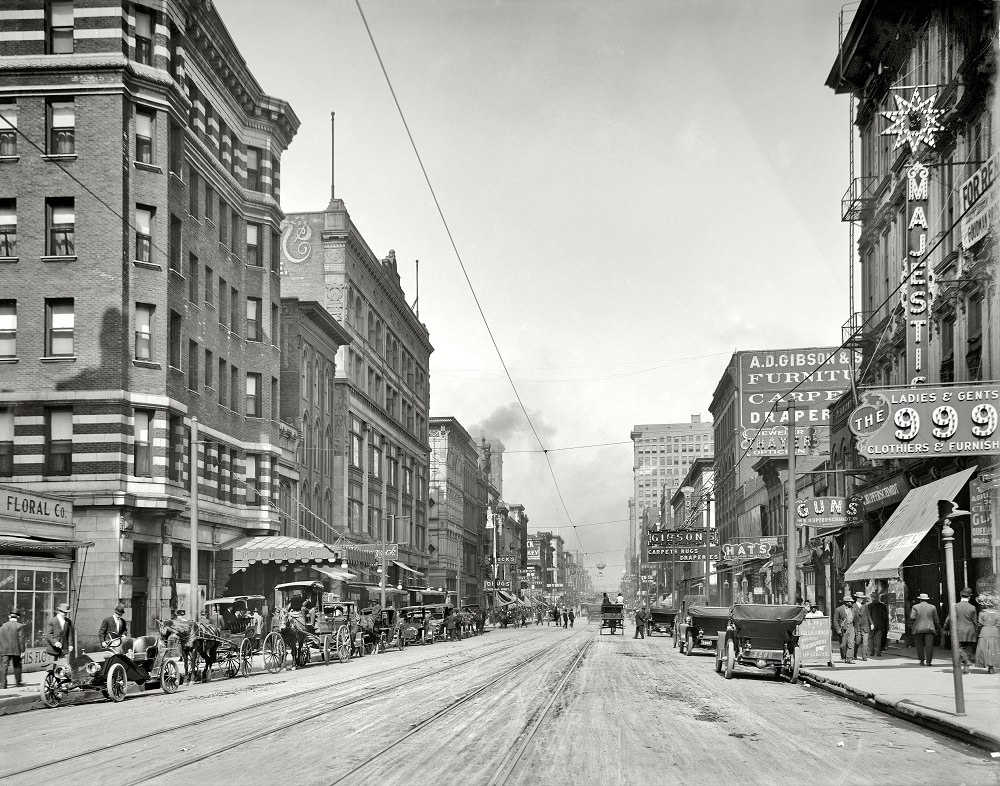
North from Gayoso Avenue, Main Street opens into a busy Memphis corridor where streetcar rails slice through the center and overhead wires sketch thin lines against the sky. Tall brick and stone buildings press close to the roadway, their façades stepped with bay windows and striped masonry, giving the block a distinctly early-20th-century city texture. The perspective draws the eye toward a hazy downtown skyline, hinting at the commercial growth reshaping the river city in 1910.
Shopfronts and signs crowd the right-hand side, advertising furniture, carpets, drapery, and clothing, with a prominent vertical “MAJESTIC” sign anchoring the streetscape. Pedestrians linger along the sidewalks while wagons and early automobiles share the same rutted surface, a snapshot of transportation in transition. Even without a single named figure, the scene reads like a daily routine—people stepping out of doorways, vehicles queued along the curb, and commerce pulling everyone toward the street.
Every detail rewards a closer look for Memphis history enthusiasts: the streetcar infrastructure, the density of storefront branding, and the mix of architectural styles typical of a thriving Southern business district. For readers searching for “Main Street Memphis 1910” or “Gayoso Avenue Memphis historic photo,” this view offers both atmosphere and evidence of how downtown worked—loud with signage, layered with traffic, and built for footfalls as much as for wheels. It’s a Places & People moment in the broadest sense, preserving the lived environment of a city block at the height of its early modern pace.