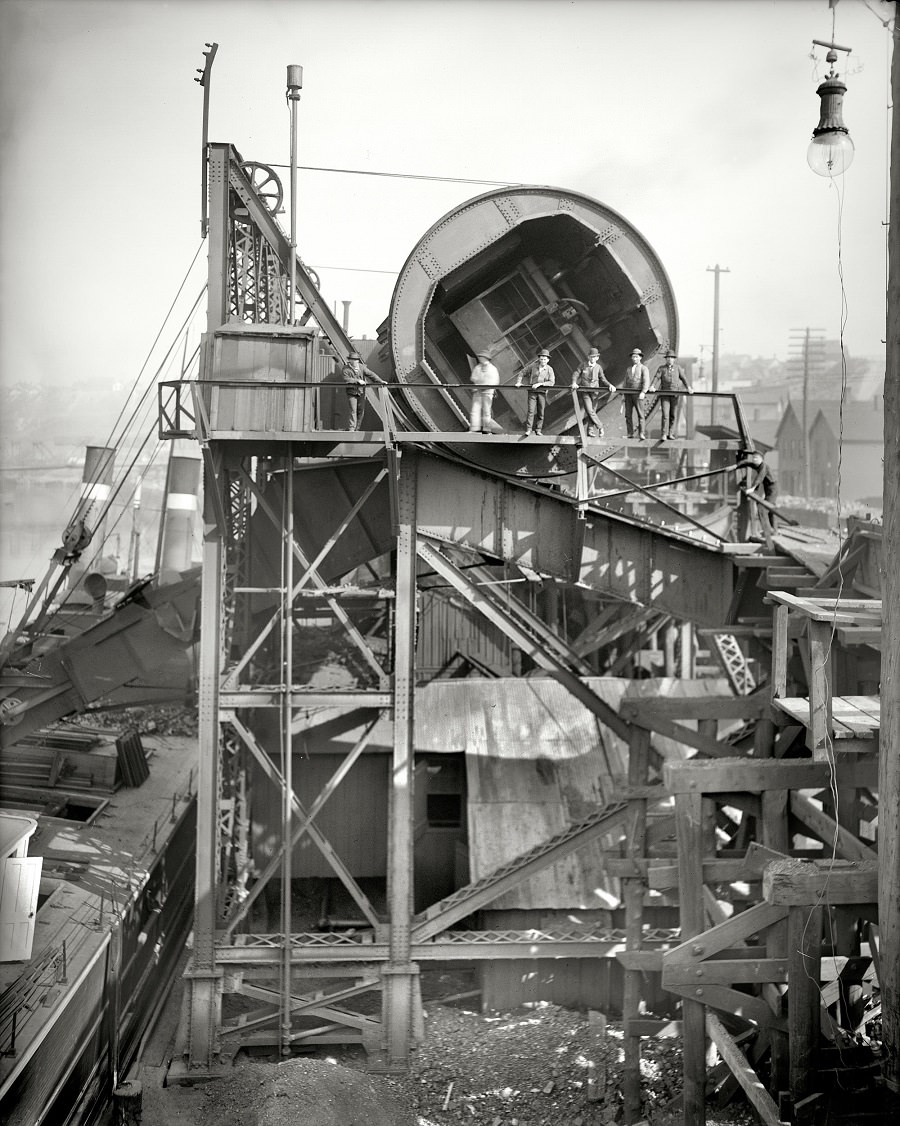
Steel trusses, cables, and a towering circular drum dominate this scene of a rotary coal car unloader in Cleveland, circa 1910. The mechanism’s massive ring sits poised to grip and roll an entire railcar, turning freight into a steady stream of fuel without the backbreaking hand shoveling earlier generations knew too well. Set against a haze of industry, the structure reads like a snapshot of the city’s working waterfront and rail connections at full stride.
Along the elevated platform, a line of workers stands nearly shoulder to shoulder, their figures giving scale to the machine’s appetite. They appear calm and practiced amid the gantries and chutes, where coal would tumble down into waiting bins or conveyors below. Even the surrounding clutter—timbers, stacked materials, and the geometry of bracing—suggests a site built for speed, volume, and constant motion.
Cleveland’s early-20th-century growth depended on energy arriving by the carload, and equipment like this rotary unloader helped keep factories, railroads, and ships supplied. For readers interested in industrial history, Great Lakes commerce, or railroad technology, the photo offers a vivid look at how infrastructure transformed “places & people” into a coordinated system. It’s a reminder that the city’s skyline and economy were shaped as much by hidden yard work and machinery as by boardrooms and boulevards.