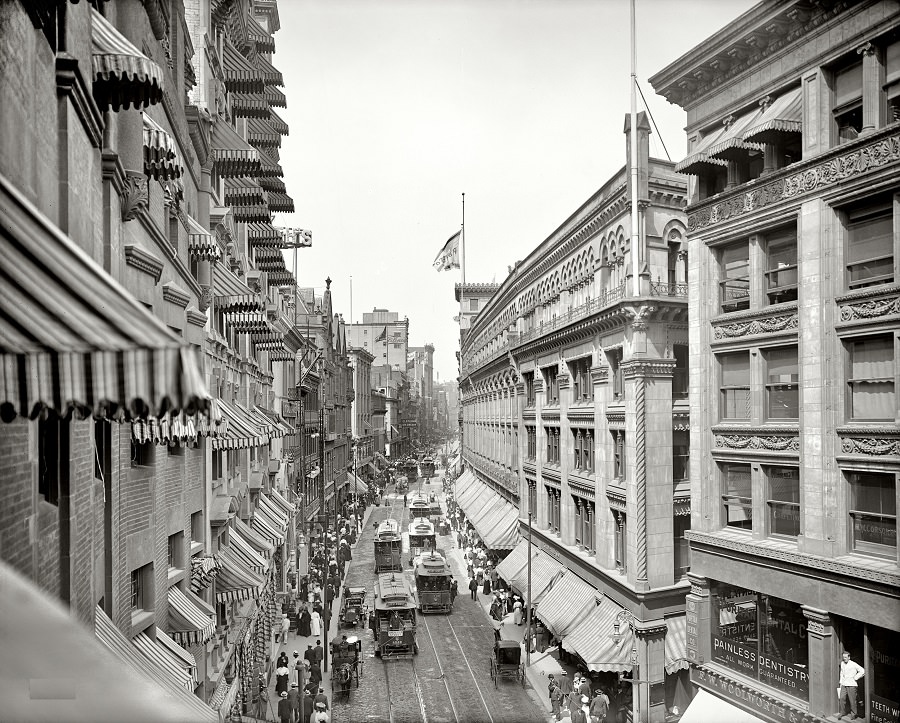
Looking down Washington Street in Boston in 1906, the scene feels tightly packed and brilliantly alive, framed by tall commercial blocks and a repeating rhythm of striped awnings. Ornate stone and brick façades lean into the corridor of the street, their windows and cornices stacked above the bustle below. From this elevated vantage, the street reads like a canyon of commerce, with signage and storefront entrances drawing the eye along the sidewalks.
Streetcars dominate the center rails, threading through a mix of horse-drawn vehicles and early motor traffic, while pedestrians crowd the edges in steady streams. The density suggests a downtown built for walking and transit, where deliveries, errands, and commuting all competed for the same narrow lanes. Even without hearing it, you can almost imagine the layered soundtrack of bells, hooves, and conversation echoing between the buildings.
In the details—shop awnings shading display windows, busy corners, and the blend of old and new transportation—Washington Street becomes a snapshot of Boston’s early 20th-century urban rhythm. For anyone interested in Boston history, city life in 1906, or the evolution of American streetscapes, this photograph offers a rich study of architecture, transit, and everyday movement. It’s a reminder that the modern city didn’t arrive overnight; it was built, block by block, in places like this.`