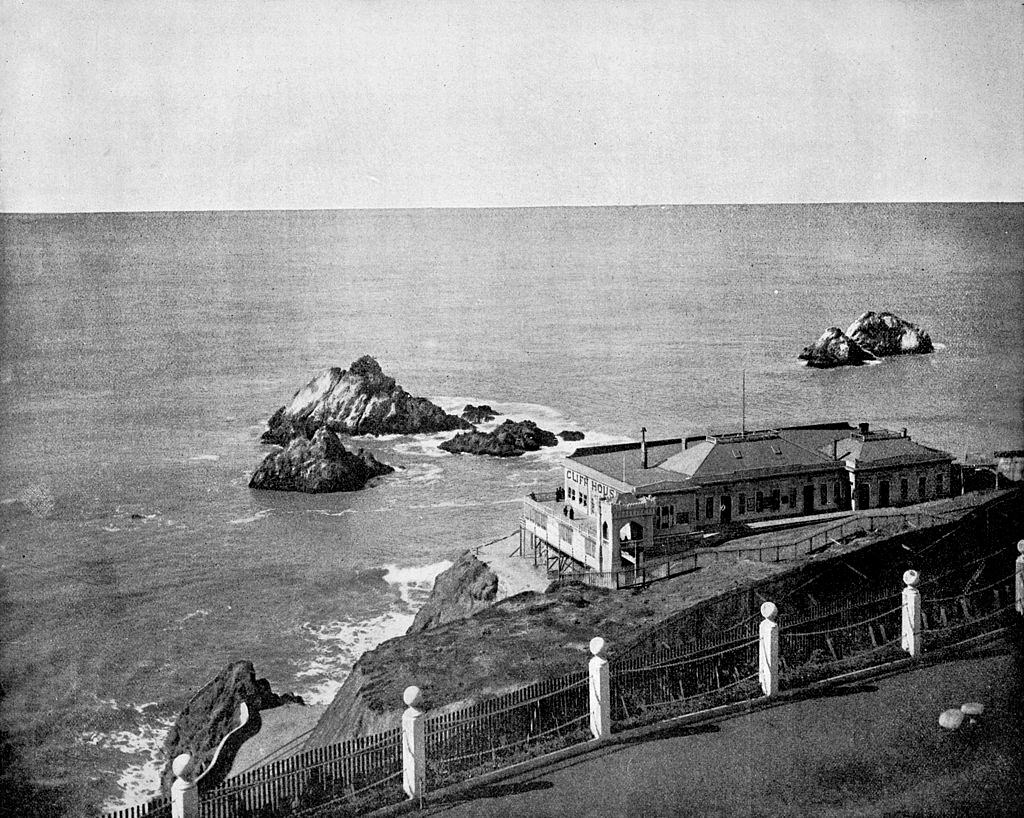
Perched at the edge of the Pacific, the Cliff House sits like a lookout above the surf, its long, low roofline and wraparound verandas facing the open water. Offshore, the rugged shapes of the Seal Rocks break the surface, ringed by pale bands of foam where waves meet stone. A fence and roadway in the foreground hint at a well-traveled viewpoint, inviting visitors to pause and take in the drama of sea and cliff.
In 1893, seaside outings were as much about spectacle as fresh air, and this scene feels built for that purpose—architecture positioned to frame nature’s theater. The building’s placement on the headland suggests a destination for dining, strolling, and watching the ocean’s moods shift through fog, wind, and sun. Even without crowds in view, the composition carries the quiet energy of tourism and leisure along a celebrated coastline.
For anyone searching for “Cliff House and Seal Rocks 1893,” this photograph offers a vivid glimpse into late-19th-century coastal life, where landmark structures and wild shoreline met in a single vista. Details like the crisp horizon line, the rocky outcrops, and the engineered pathways underscore the balance between untamed seascape and human presence. It’s a timeless view—part postcard, part record—capturing why this stretch of coast became an enduring symbol of place and memory.