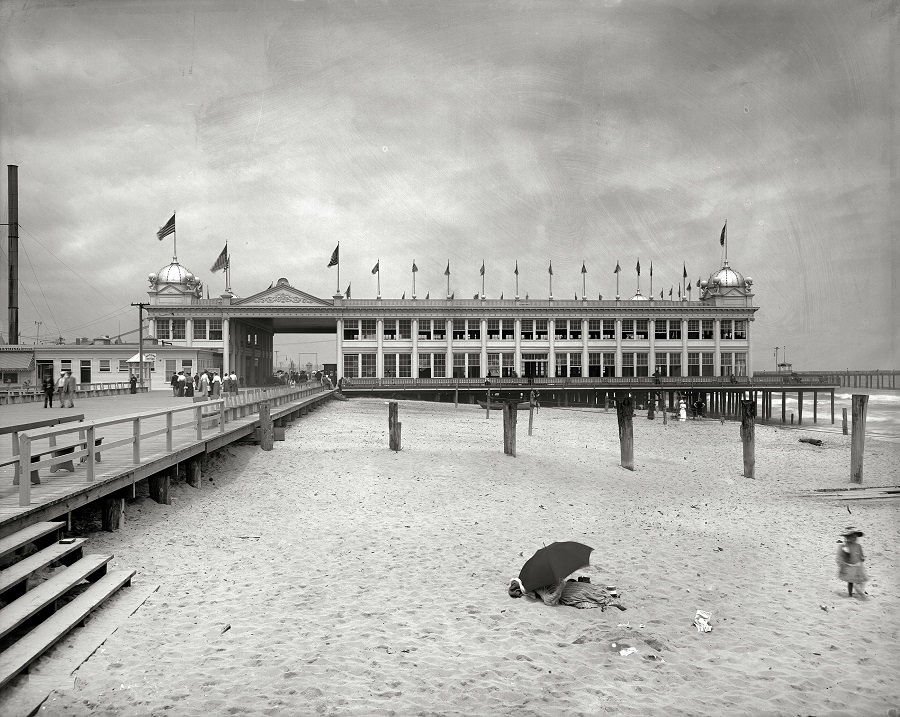
Stretching out over the sand on sturdy pilings, the casino at Asbury Park appears as a long, elegant seaside pavilion, crowned by small domes and lined with fluttering flags. A wooden walkway leads the eye from the foreground toward the entrance, where small clusters of visitors gather, their light clothing and hats suggesting a leisurely day at the shore. Off to the side, a tall smokestack rises behind the structures, a quiet reminder that this resort landscape also existed alongside the working machinery of a modernizing coast. Along the beach, everyday life unfolds in miniature: a figure rests beneath a dark parasol on the open sand while another person moves at the edge of the frame, and the ocean breaks to the right with a low, steady rhythm. The building’s repeating windows and broad facade emphasize scale and order, while the scattered posts in the sand hint at changing tides, maintenance, or the remains of earlier construction. Taken together, the scene balances architecture, weather, and human presence in a way that feels both staged and wonderfully candid. For anyone searching for Asbury Park history, early boardwalk scenes, or New Jersey shore landmarks, this 1905 view offers a vivid window into the era’s coastal tourism. The casino reads less like a gambling hall and more like a social centerpiece—an attraction designed for promenades, gatherings, and spectacle against the Atlantic backdrop. Details such as the pier-like supports, the flag-lined roofline, and the steady stream of pedestrians make the photograph a rich reference point for how recreation and place shaped the identity of the shoreline.