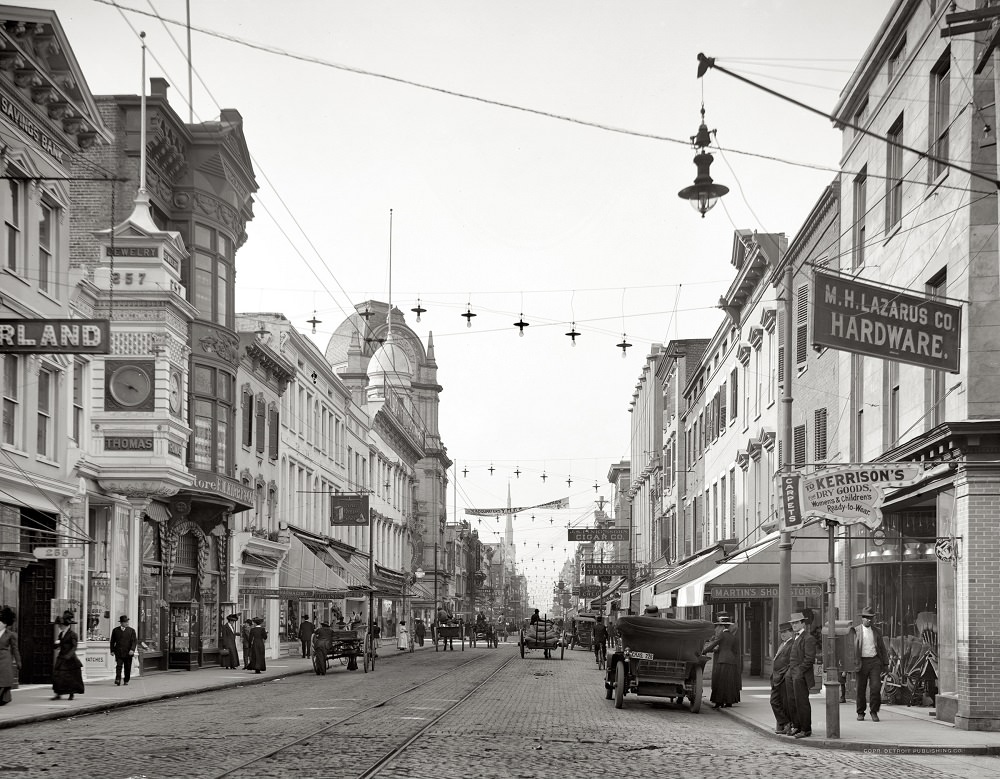
King Street looking north in Charleston, circa 1910, reads like a busy commercial corridor caught between eras. Streetcar rails run straight down the cobblestones while overhead wires and suspended lamps crisscross the sky, hinting at the city’s electrified modernity. Along both sidewalks, awnings and bay-windowed façades stack up in layers of signage and ornament, turning the streetscape into a catalog of early 20th-century retail life.
On the right, a prominent “M. H. Lazarus Co. Hardware” sign anchors the block, with additional shopfront lettering—goods, clothing, and other everyday necessities—spilling into the viewer’s line of sight. Across the way, a “jewelry” sign and other storefront markers punctuate the left side, suggesting a downtown where specialized trades sat door-to-door. Wagons and early automobiles share the same lane, and pedestrians in hats and long coats linger at the curb, making the scene feel both orderly and alive.
For readers interested in Charleston history, King Street’s long view offers more than architecture; it reveals how people, transportation, and commerce met in the public space of the street. The mix of horse-drawn vehicles, motor cars, and the fixed presence of the streetcar tracks captures a transitional moment in urban life. As a historical photo of Charleston’s King Street, it’s a rich reference point for anyone tracing how the city’s downtown character was built storefront by storefront, block by block.