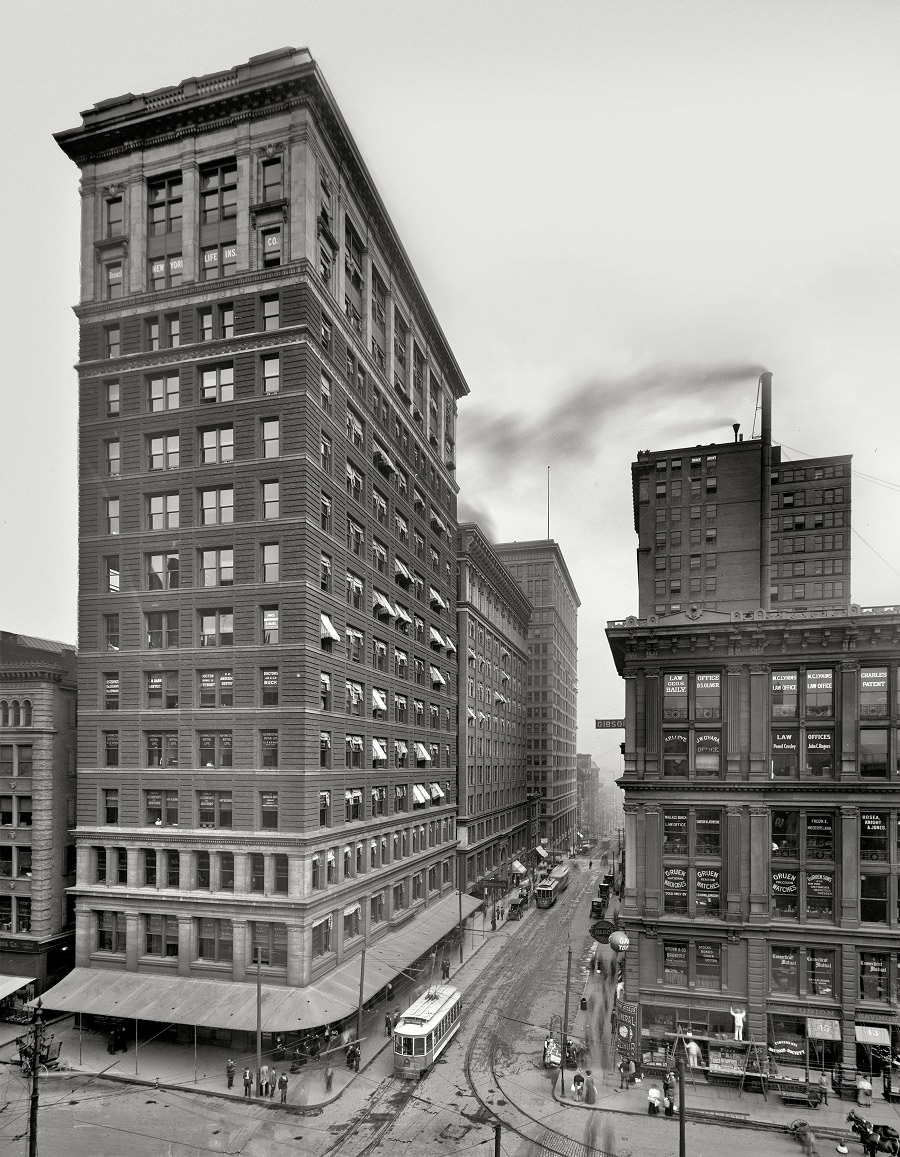
Walnut Street in Cincinnati, circa 1910, reads here as a corridor of ambition, lined with tall commercial blocks whose crisp stonework and repeating window grids speak to a city building upward. A prominent corner tower anchors the scene, its upper floors marked by the signage of an insurance company, while neighboring façades show the layered look of early-20th-century downtown architecture—ornamental cornices above, practical storefronts below.
Street life is in motion along the tracks: an electric streetcar glides through the intersection as pedestrians cluster at corners and along the sidewalks. Overhead wires, curving rails, and a mix of awnings and shop windows highlight how transit and commerce shared the same tight urban space, making Walnut Street a daily thoroughfare for workers, shoppers, and office-goers.
For anyone interested in Cincinnati history, urban development, or vintage street scenes, the details reward a slow look—painted window lettering, busy ground-floor businesses, and the haze of industrial smoke drifting behind the skyline. The photograph captures a moment when downtown streets were defined by streetcars and walkability, offering a textured glimpse into how Walnut Street once looked and felt at the heart of the city.