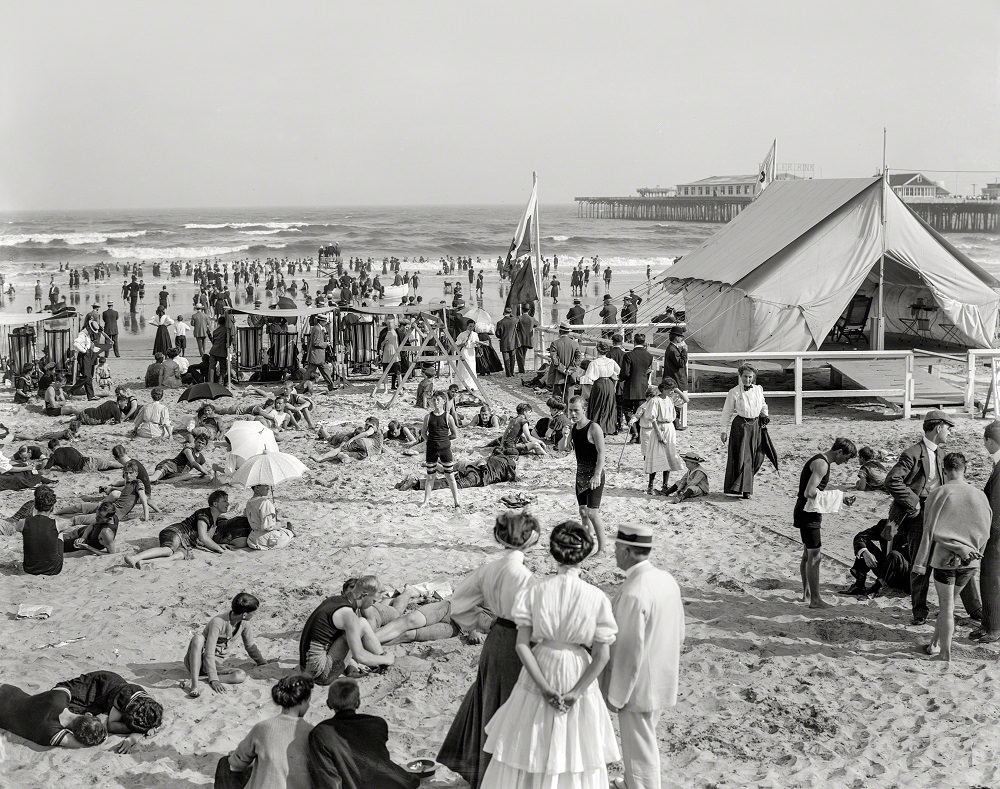
Bathing hour at Atlantic City feels less like a quiet dip and more like a carefully timed social ritual, with the Jersey Shore surf crowded by hundreds of holidaymakers wading at once. In the foreground, people lounge on the sand beneath parasols while others stand in heavier early-1900s swimwear, watching the waterline as if waiting for a cue. Farther out, the Atlantic churns in bright bands of foam, turning the shoreline into a stage where leisure and spectacle blend. Along the beach, rows of changing booths and a large canvas tent suggest an organized seaside operation, built to manage modesty, comfort, and the sheer volume of visitors. Men in boater hats mingle with women in long skirts and high-collared blouses, a reminder that “going to the beach” was still as much about appearance as recreation. The pier structures in the distance anchor the scene in Atlantic City’s bustling resort landscape, where boardwalk amusements and ocean air drew crowds season after season. Circa 1908, this kind of summer gathering captures a moment when American coastal tourism was becoming modern—more accessible, more commercial, and unmistakably communal. The photograph rewards close looking: relaxed postures, clustered conversations, and the subtle choreography between those braving the waves and those content to sun themselves on dry sand. For anyone searching vintage Atlantic City history, early 20th-century beach life, or the Jersey Shore’s golden-age resort culture, this image offers a rich, human panorama.