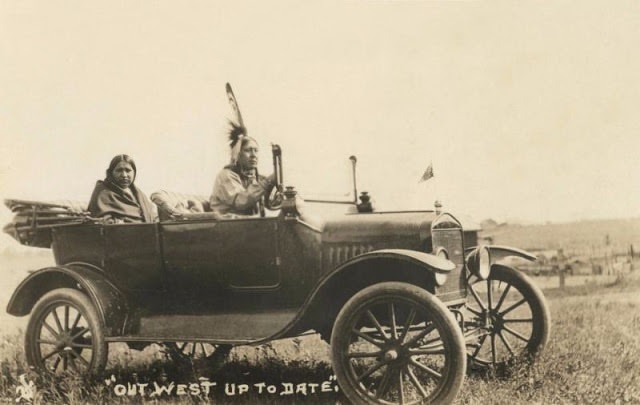
A low-slung early automobile sits in open country, its tall wheels and upright windshield marking it as a machine from motoring’s first decades. Two Indigenous passengers ride high in the touring car, blankets gathered around them against the wind, while the driver’s area and steering wheel draw the eye to the novelty of speed and control. Along the bottom edge, a period caption—“Out West Up to Date”—frames the scene as a statement about modernity as much as it is a travel moment.
Wealth in the Osage Nation during the oil era upended stereotypes that outsiders had long imposed, and photographs like this were often used to advertise that reversal with a single glance. Chauffeur-driven cars, tailored clothing, and confident public appearances became visible symbols of prosperity—yet they also invited scrutiny, envy, and relentless attention from the surrounding world. The tension between self-possession and being put on display lingers in the way the subjects meet the camera from a seat associated with status.
For readers searching the story behind “Osage tribe richest people in the world,” the details here offer a quiet entry point: technology, power, and identity sharing the same frame. The open landscape hints at the broader West that was being rapidly transformed by oil money, roads, and new consumer goods, while the passengers’ traditional elements refuse to be erased by the car’s shiny promise. Seen today, the image works as both a snapshot of early automotive culture and a reminder that Indigenous history includes modern wealth, mobility, and the complicated costs that followed.