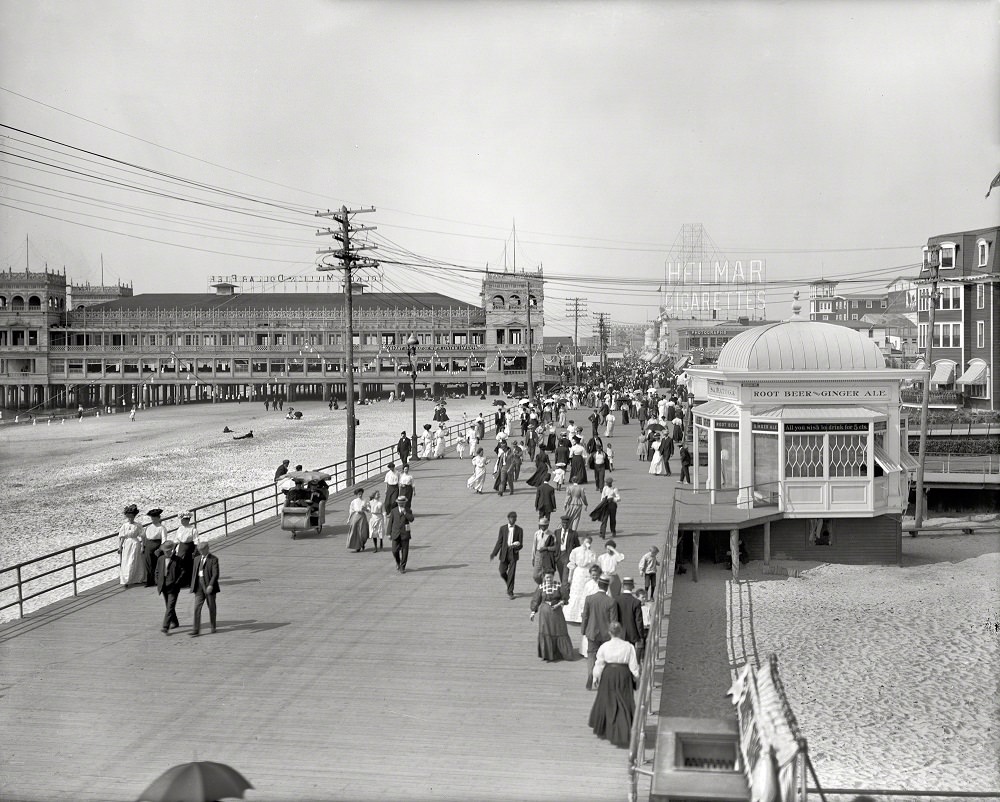
Morning and afternoon strolls defined Atlantic City’s identity in the early 1900s, and the boardwalk in 1908 reads like a living stage. Men in dark suits and straw hats move in steady streams beside women in long skirts and wide-brimmed hats, while the open beach stretches out to the left. The scene balances leisure and spectacle, offering a street-level look at how a seaside resort welcomed crowds long before modern casualwear took over. Off to the right, a round pavilion advertises “Root Beer—Ginger Ale,” a small but telling detail of boardwalk commerce at the height of the city’s vacation boom. Overhead wires, utility poles, and a dense line of buildings and piers anchor the view in a fast-growing urban shoreline, where entertainment, lodging, and infrastructure competed for space. In the distance, signage rises above the roofs, hinting at the brand-heavy atmosphere that would become synonymous with Atlantic City. Along this busy plank walkway, you can almost hear the rhythm of footsteps, the murmur of conversation, and the faint crash of waves beyond the rail. For readers exploring Atlantic City history, the 1908 boardwalk offers a textured snapshot of places and people—fashion, advertising, architecture, and everyday movement captured in one expansive vista. It’s a reminder that the boardwalk wasn’t just a path by the ocean; it was the city’s main promenade and a public theater where modern leisure took shape.