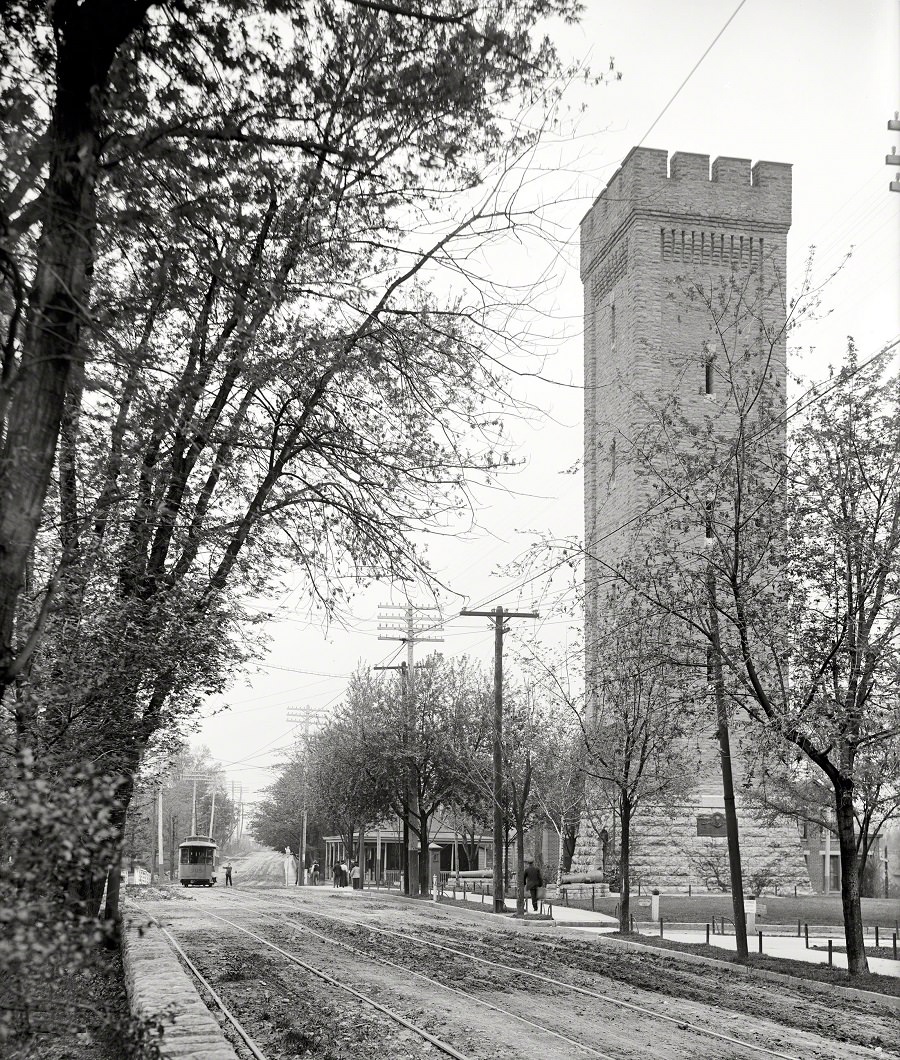
Rising above the treetops, the Water Tower at Fort Thomas commands the streetscape with a fortress-like silhouette that feels both practical and ceremonial. Its thick stonework and crenellated top suggest a time when civic infrastructure was built to last—and to be seen—serving as a landmark as much as a utility. In this Cincinnati-area view from circa 1907, the tower anchors a scene of everyday movement and expanding neighborhoods.
Along the road, streetcar tracks run straight into the distance, where a trolley car appears under a web of overhead lines and telegraph poles. The unpaved surface, the orderly row of trees, and the scattered pedestrians create a vivid snapshot of early 20th-century urban life, when public transit stitched communities together and new services reshaped routines. Even the soft haze of the background adds to the sense of a city edge in transition, balancing greenery with growing development.
Fort Thomas’s water tower stands here as a reminder that the story of a place is often written in its working buildings—structures that made modern living possible while quietly defining the skyline. For local history enthusiasts and Cincinnati heritage researchers, details like the street railway, the stone architecture, and the surrounding streetscape offer rich clues about how the region looked and functioned in the years before automobiles dominated. Viewed today, the photograph reads as both a piece of engineering history and a portrait of a community on the move.