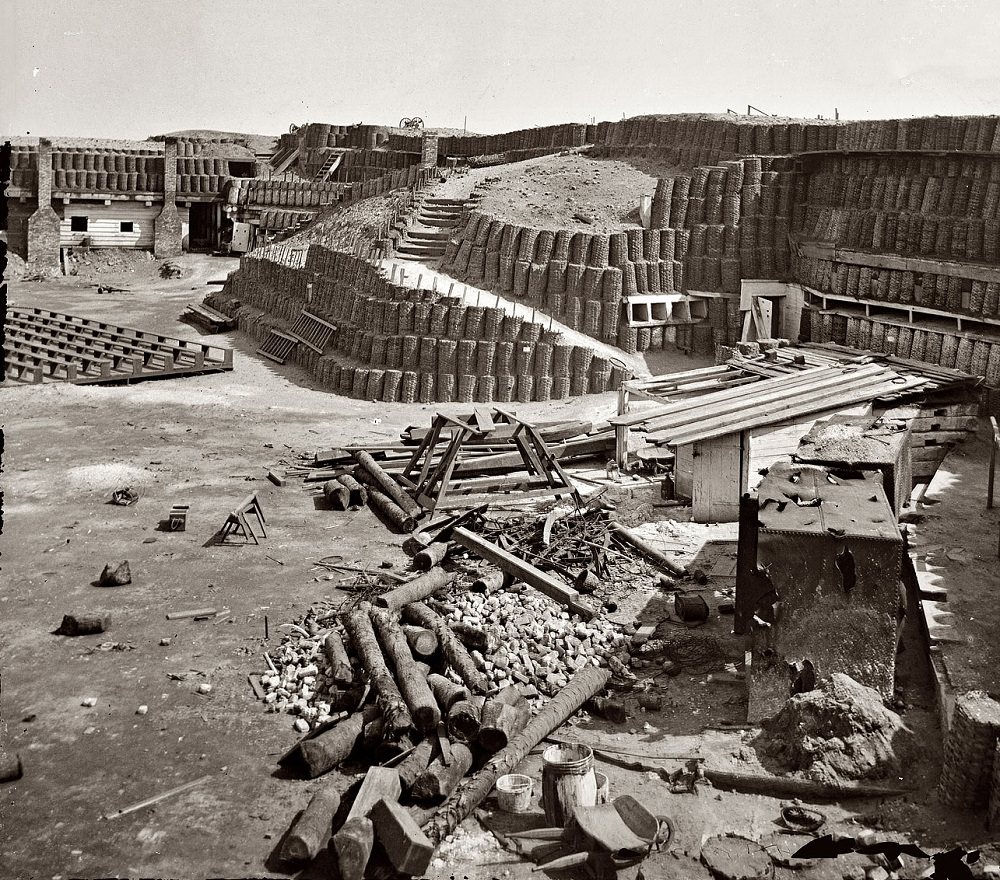
Inside Fort Sumter, the scene in 1865 is all angles and scars—tiered earthworks rising where masonry once dominated, and walls packed tightly with gabion reinforcements. The fort’s interior reads like a hastily rewritten blueprint, with stacked cylindrical baskets forming protective faces and zig-zagging lines that suggest defensive logic shaped by hard experience. Even without close-ups of people, the layout speaks of labor, urgency, and a garrison adapting to the realities of modern siege warfare.
Across the sandy ground lie the ordinary remnants of extraordinary conflict: scattered timbers, rough platforms, and heaps of debris that look both improvised and purposeful. A low shed-like structure and exposed framing hint at ongoing repair or salvage, as if the fort is caught between destruction and rebuilding. The stark openness of the parade-like space emphasizes how much has been stripped away, leaving behind a functional landscape of protection rather than ceremony.
For readers searching Civil War history, Fort Sumter interiors, or period military engineering, this photograph offers a clear view of how earth and gabions could reshape a famous coastal fortress from the inside out. It is less a triumphant monument than a working site—part ruin, part workshop—where survival dictated design. The title’s simple specificity, “Interior of Fort Sumter, with gabion reinforcements, 1865,” matches what the camera records: a place transformed by war, and still in the process of being made usable again.