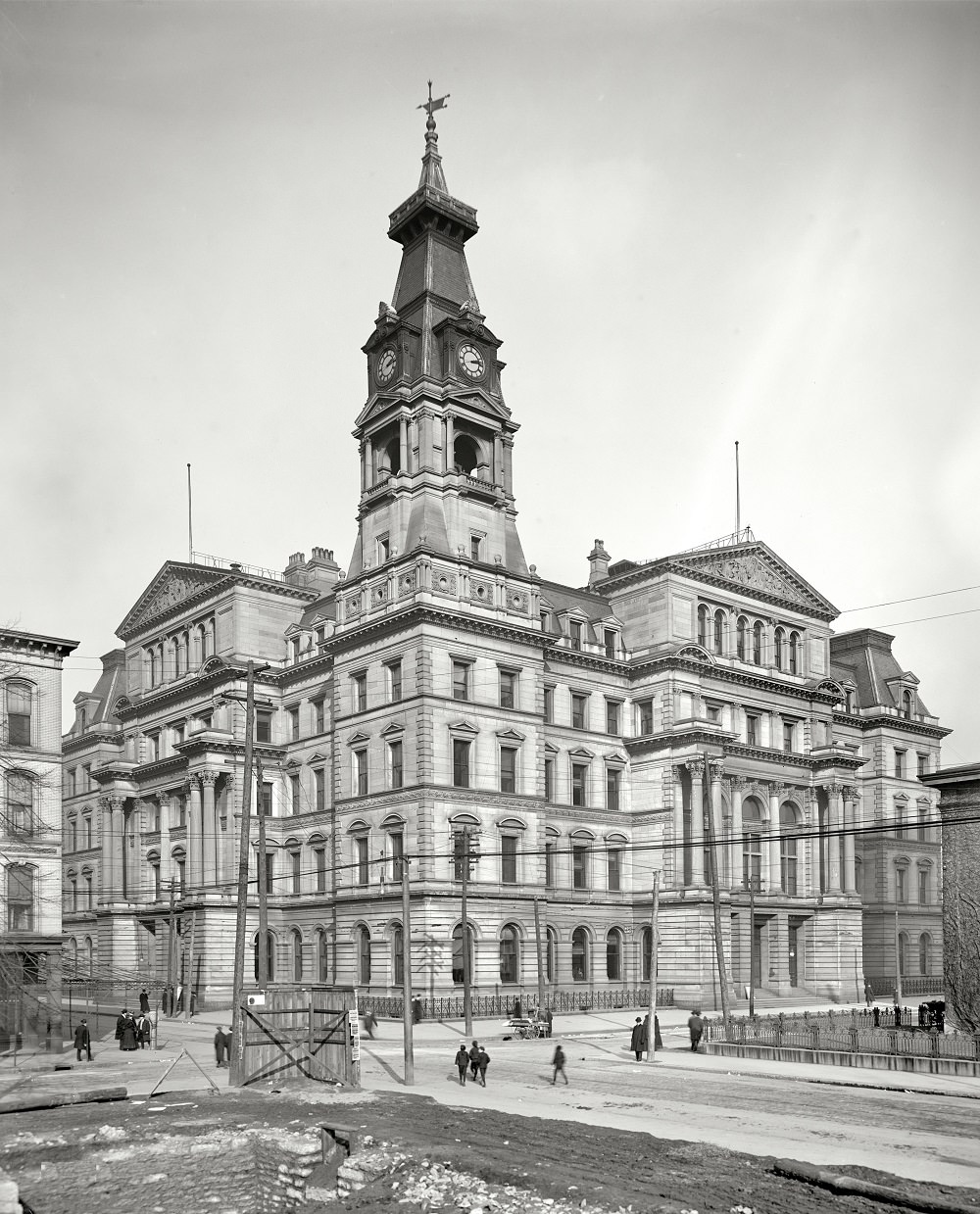
Rising above the street with a commanding clock tower, Louisville’s post office in 1906 reads like a civic landmark meant to be seen from blocks away. The building’s stonework, layered cornices, and symmetrical wings create a grand façade, while the steep rooflines and ornate pediments signal the pride cities placed in public architecture at the turn of the twentieth century. Even without a close view of signage, the composition makes the structure unmistakably official—built to project stability, order, and modern efficiency.
At ground level, everyday life gathers around the edges of the scene: small figures move along the sidewalk, and the broad street in front feels busy even in stillness. Utility poles and overhead lines cut across the view, a reminder that communications in 1906 weren’t only carried by letters but also by wires stretching through growing downtown corridors. The contrast between the monumental building and the modest scale of pedestrians helps the post office feel less like a museum piece and more like a working hub.
For anyone searching local history, Louisville architecture, or early 1900s city scenes, this photograph offers more than a handsome façade—it preserves the look of public space shaped by mail, transit, and daily errands. The post office stands as a symbol of connection in an era when envelopes, stamps, and schedules stitched communities together. As a “places and people” snapshot, it captures how a single government building could anchor both the skyline and the routines of the street below.